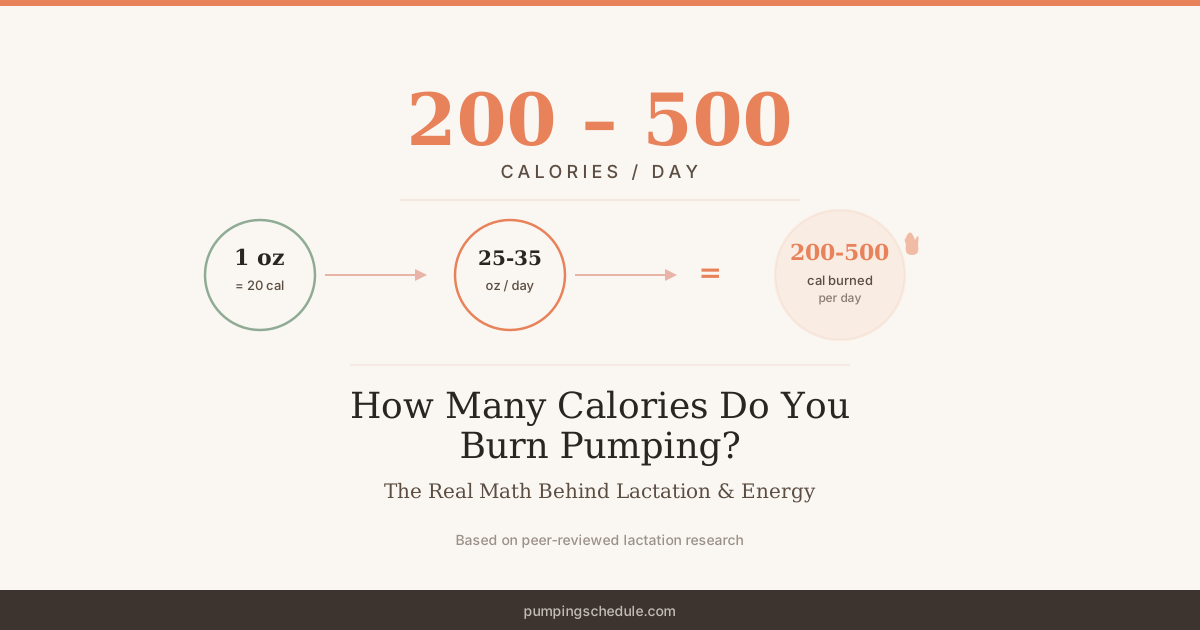
About 200-500 calories per day. That is how many calories you burn pumping, and the range is wide because the number depends almost entirely on milk volume — not session count, not duration, not whether you splurged on a Spectra S1 or inherited a hand-me-down Medela. A mom producing 30 oz daily burns roughly twice the breastfeeding calories of a mom producing 15 oz, even with the same pumping schedule.
The internet loves to throw around “500 calories per session!” as if your pump is a Peloton. It is not. (The treadmill wishes it could burn this many calories while you sit and scroll.) But the cumulative daily burn from lactation is real, measurable, and worth understanding — especially if you are making decisions about nutrition, dropping sessions, or wondering why you are ravenously hungry at 2 PM every single day.
How Many Calories Does Pumping Actually Burn?
The mechanical act of pumping — sitting there while a machine extracts milk — burns almost nothing. Maybe 50-80 calories per hour above your resting rate. About the same as a conference call, and roughly as thrilling.
What burns calories is making the milk. Your body synthesizes breast milk from scratch: assembling fatty acids, converting glucose into lactose, building immunoglobulins. Research by Butte and King on energy requirements during lactation estimates that producing breast milk costs approximately 20 calories per ounce — roughly the same calories in each ounce of breast milk your baby actually drinks. That number holds whether milk leaves through a pump flange or a baby's mouth.
So “how many calories do you burn pumping?” is really “how many ounces do you produce per day?”
As one EP mom put it on Reddit: “I tracked my output for a month and lost weight the weeks I made more milk — had nothing to do with how long my sessions were.” That lines up with the research. For most exclusively pumping moms on a full exclusive pumping schedule, daily output lands between 25 and 35 oz, translating to 500-700 gross calories burned pumping through milk production. But not all of those come from your daily food — some come from fat stores your body laid down during pregnancy specifically for this purpose.
The Math: Sessions, Duration, and Energy Cost
Here is the calculation, broken into pieces you can apply to your own output:
Step 1: Calories per ounce.Producing 1 oz of breast milk requires approximately 20 calories of metabolic energy — covering fat synthesis (about 50% of breast milk's caloric content — see our guide to breast milk fat), proteins, lactose, and micronutrients.
Step 2: Your daily output. Track total ounces across all sessions for 3-5 days. Average EP output ranges from 25-35 oz per day, though 15 to 50+ oz all fall within normal.
Step 3: Gross calorie burn. Multiply daily output by 20. Producing 25 oz? That is 500 calories. Producing 35 oz? That is 700.
Step 4: The pregnancy-fat offset.Your body stored fat during pregnancy partly to fuel lactation. Roughly 100-200 of those daily milk-production calories come from mobilizing those reserves rather than from today's food. The AAP's guidance on maternal nutrition during lactation acknowledges this offset when recommending 450-500 additional daily calories for breastfeeding mothers.
Step 5: Net additional burn. Subtract the fat-store offset from gross calories. For a mom producing 25-35 oz per day, net additional expenditure lands at roughly 200-500 calories per day.
Session count and duration affect the math only indirectly: more frequent sessions tend to increase milk supply, which means more ounces, which means more calories burned pumping. But a 20-minute session that yields 4 oz burns the same production calories as a 30-minute session that yields 4 oz. Output is the variable. Duration is not.
Myths vs Reality About Pumping and Weight Loss
Pumping and weight loss conversations attract a lot of wishful math.
“Pumping burns 500+ calories per session.” A single 20-minute session burns roughly 20 calories from the act itself — about the same as folding laundry. The calories burned from milk production happen continuously as your body manufactures milk throughout the day, not only during the minutes you are attached to a pump.
“You will lose all your baby weight just from pumping.” The 200-500 calorie daily burn from lactation does contribute to a deficit — but only if your intake does not compensate. Many pumping moms experience intense hunger (your body is not subtle about wanting those breastfeeding calories replaced), and eating to that hunger is exactly what you should do. Weight loss from pumping alone is gradual for most women. Anyone promising rapid results is selling something.
“Pumping and breastfeeding burn different amounts of calories.” Milk production is the metabolic event, not milk removal. Whether a Spectra S1 or your baby empties the breast, your body spent the same energy making that milk. CDC guidance on nutrition during breastfeeding does not distinguish between methods — calorie recommendations apply equally to both.
“You need to eat exactly 500 extra calories per day.” The 450-500 extra calorie guideline from the AAP is a population average, not a personal prescription. Your needs depend on pre-pregnancy weight, activity level, milk output, and how much pregnancy fat your body is mobilizing. Some moms need 300 extra. Some need 600. Hunger cues beat a fixed number.
Why You Should Not Cut Calories While Pumping
Knowing that pumping burns calories naturally leads to “what if I also ate less?” Do not do that. Your supply will thank you for resisting.
Calorie restriction during lactation is a supply killer. Drop below roughly 1,500-1,800 calories per day and production typically suffers. The AAP recommends an additional 450-500 calories beyond non-lactating needs — not fewer.
The moms who lose weight while maintaining supply are not dieting. They eat when hungry, choose nutrient-dense foods, and let the metabolic cost of lactation create a mild deficit naturally over months. Slow and boring, but it works without sabotaging output. As one Reddit poster described it: “I ate like a linebacker for six months and still dropped 20 pounds. The pump did the work.”
Watch for signs you are under-fueling: supply dips over several days, persistent fatigue beyond normal new-mom tired, dizziness, or losing more than 1.5 pounds per week. If any show up, eat more — your pumping frequency is not the problem, your calorie intake is.
One practical move: keep calorie-dense snacks within reach of your pumping spot. Nuts, cheese, granola bars — whatever you actually like. If you are pumping at work, stash trail mix in your pump bag. Your body is running a small factory around the clock. It needs fuel, not rationing.
Last reviewed: June 2026 by the Pumping Schedule Editorial Team. Read our editorial standards.