What "Hospital Grade" Actually Means
You search "best hospital grade breast pump," and suddenly every Amazon listing claims hospital-level suction. Here's the problem: "hospital grade" has a clinical definition that none of those listings meet. It means a multi-user, rental-only device — a Medela Symphony or Ameda Platinum — costing $1,000-2,000, living in a hospital lactation department, built for years of institutional abuse with individual accessory kits swapped between mothers.
The "hospital-grade suction" and "hospital-strength performance" you see on Instagram? Marketing copy. The FDA classifies every breast pump as a Class II medical device. No "hospital grade" certification exists.
This guide ranks the strongest personal-use breast pumps you can buy and own — pumps that match hospital rental suction in a device that stays on your shelf. For most exclusive pumping moms, they perform identically to a rental minus the $70-100 monthly fee.
Best Overall — Spectra S2 Plus
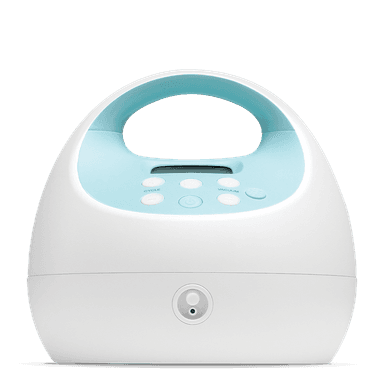
Spectra S2 Plus
Best for: Maximum suction at minimum cost — the IBCLC default recommendation
$60–$100 (usually $0 through insurance)
Read full reviewThe Spectra S2 pulls 270 mmHg of suction — independently verified, not just marketing math. That number beats what most moms actually feel on a Medela Symphony hospital rental. Adjustable cycle speed (38-54 CPM) lets you dial in your baby's rhythm, something no fixed-speed pump can replicate.
At $0 through most insurance plans, the S2 is a no-brainer. As one EP mom on Reddit put it: "I had a Symphony rental for 3 weeks, switched to the S2, and my output didn't change at all." (A story we've heard repeated across pumping forums enough times to call it a pattern, not an anecdote.) The AAP recommends exclusive breastmilk for six months — the S2 gives you the suction to sustain supply that long.
One catch: no battery. Every session, you're tethered to a wall outlet. (Your couch becomes a pumping station whether you intended it or not.) If that's a dealbreaker, scroll down to the S1 — same motor, rechargeable battery, $30-80 more. Or grab a $20 portable battery pack off Amazon and call it solved.
Overall score
out of 10
What we like
- 270 mmHg suction — independently verified, matches hospital rental output
- Adjustable cycle speed (38–54 CPM) — unique at this price point
- $0 through most insurance plans
- Closed system, 2-year warranty, LCD with timer and night light
What could be better
- No battery — AC power only
- Stock flanges (24mm, 28mm) are too large for most women
- Not portable — stays in one spot
Best Portable Hospital-Strength — Spectra S1 Plus
Spectra S1 Plus
Best for: Hospital-level suction untethered from the wall
$160–$225 ($30–$80 insurance upgrade)
Read full reviewSame motor. Same 270 mmHg suction. Same adjustable cycle speed. The difference: a rechargeable lithium-ion battery giving you roughly three hours of active pumping — about six 25-minute sessions per charge. Read our full Spectra S1 Plus review for settings, parts guide, and battery degradation data. If you pump at work near outlets, that covers a full day. Road trip to your in-laws? The S1 rides shotgun.
Fair warning on the battery: it degrades. After 6-12 months of heavy EP use, expect the three-hour runtime to shrink below two. One frustrated mom in r/ExclusivelyPumping described her eight-month-old S1 battery as "a suggestion, not a promise." You can't swap the battery yourself, either. If longevity worries you, the S2 plus a portable battery pack is the cheaper, more repairable route.
Insurance covers the S1 with a typical $30-80 upgrade over the free S2. Worth it if you regularly pump untethered. Skip the upgrade if 90% of your pumping schedule happens in the same room at home.
What we like
- Same 270 mmHg suction and adjustable cycle speed as the S2
- Rechargeable battery — ~3 hours / 6 sessions per charge
- Available through insurance with modest upgrade fee
- Closed system, 2-year warranty
What could be better
- Battery degrades with heavy daily use after 6–12 months
- Heavier than S2 (3.3 lbs vs 2.7 lbs)
- Same oversized stock flanges
- Battery not user-replaceable
Widest Flange Range — Medela Pump In Style MaxFlow
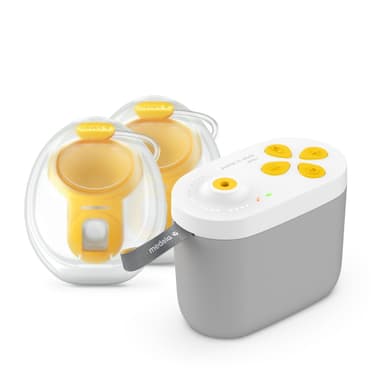
Medela Pump In Style MaxFlow
Best for: Moms who need flange sizes outside the standard 21-28mm range
$118–$180 (often $0 through insurance)
Read full reviewThe Medela Pump In Style lands on this list for one reason no other pump can match: flange selection. PersonalFit Flex spans nine sizes from 15mm to 36mm — the widest range any manufacturer offers. If your nipples fall outside the 21-28mm window that Spectra and most competitors default to, Medela fits you without third-party inserts.
That matters more than suction specs. A NIH study found that individualized flange sizing improved both comfort and milk removal efficiency. A 270 mmHg pump with the wrong flange size loses to a 200 mmHg pump that actually fits you.
The trade-offs are real, though. Suction tests show 160-230 mmHg depending on the source — well below the Spectra's verified 270. Noise at 58 dB is noticeably louder (your partner will know when you're pumping from two rooms away). No built-in battery. The 1-year warranty is half of Spectra's. And Medela still won't publish independent suction data — a transparency gap that stings when the whole point of a hospital grade pump search is finding verified performance.
Overall score
out of 10
What we like
- Widest flange range of any pump (15–36mm PersonalFit Flex)
- 105-degree flange angle designed for comfort
- Free through most insurance plans
- Replacement parts available everywhere (Target, Walmart, Amazon)
What could be better
- Weaker suction than Spectra (160–230 mmHg vs 270 mmHg)
- Loudest pump in this guide (~58 dB)
- No built-in battery; AA pack is widely criticized
- 1-year warranty (Spectra offers 2 years)
Full Comparison
All suction figures below use independent measurements where available. Every pump here is closed-system — though with the Medela, make sure you're getting the MaxFlow version. The older Pump In Style Advanced was open-system.
| Feature | Spectra S2 PlusBest Overall | Spectra S1 PlusBest Portable | Medela Pump In StyleWidest Flanges |
|---|---|---|---|
| Suction | 270 mmHg (verified) | 270 mmHg (verified) | 160–230 mmHg (varies by test) |
| Cycle Speed | 38–54 CPM (adjustable) | 38–54 CPM (adjustable) | Fixed at ~60 CPM |
| Noise | <45 dB | <45 dB | ~58 dB |
| Battery | None (AC only) | ~3 hrs rechargeable | None (AA battery pack optional) |
| System | Closed | Closed | Closed (MaxFlow version) |
| Flanges | 24mm, 28mm stock; aftermarket 13mm+ | 24mm, 28mm stock; aftermarket 13mm+ | 15mm–36mm (9 sizes, PersonalFit Flex) |
| Warranty | 2 years | 2 years | 1 year |
| Insurance | $0 (most plans) | $30–$80 upgrade | $0 (most plans) |
| Price | $60–$100 | $160–$225 | $118–$180 |
| Our score | 9/10 | 8.5/10 | 7/10 |
Personal Pump vs Hospital Rental: When Each Makes Sense
Rent a Medela Symphony (~$70-100/month) if your baby is in the NICU and can't nurse yet, you're working through severe supply issues with an IBCLC, or you're in the first 48 hours postpartum trying to bring milk in. Insurance often covers it with a prescription.
For everyone else — and that includes most exclusive pumpers — the strongest breast pump you can buy outperforms the rental experience. The Spectra S2's 270 mmHg matches or beats what a Symphony delivers in practice. You own it, there's no monthly bill, and insurance covers it.
The path most IBCLCs map out: rent for the first 2-4 weeks if clinically needed, then transition to a personal pump once supply stabilizes. La Leche League notes that after supply is established (typically around 6-8 weeks), maintaining it requires consistent emptying — which a quality personal pump handles fine.
Who Actually Needs a Hospital Grade Pump
NICU parents.Your baby can't nurse yet, so you need maximum stimulation while supply establishes. Most NICUs have Symphony pump stations — ask the lactation team on day one.
Moms with diagnosed supply issues. Under IBCLC supervision, a rental isolates whether the pump or another factor is limiting output. Try one before blaming your body — sometimes the pump is the variable.
Everyone else?Start with the Spectra S2 at $0. If you're pulling 25-35 oz per day on a full exclusive pumping schedule, you already own the best hospital grade breast pump you need. Put the rental budget toward a wearable pump for work or a proper flange fitting instead.
Insurance Coverage
The ACA requires most insurance plans to cover a personal breast pump at no cost. Rentals need a separate authorization and a doctor's prescription.
| Pump | Type | Insurance cost |
|---|---|---|
| Spectra S2 | Personal (purchase) | $0 (most plans) |
| Spectra S1 | Personal (purchase) | $30–$80 upgrade fee |
| Medela Pump In Style | Personal (purchase) | $0 (most plans) |
| Medela Symphony | Hospital rental | $70–$100/mo (Rx required) |
Order your personal pump through a DME supplier — Aeroflow, Edgepark, or 1 Natural Way are the big three — about 30-60 days before your due date. For rentals, your OB or IBCLC writes the prescription. Hospital lactation departments usually have Symphonys available same-day.
Last reviewed: June 18, 2026 | By the Pumping Schedule Editorial Team | Editorial standards
Related Reading
- Best Breast Pumps 2026 — all 6 pumps ranked including wearables
- Best Hands-Free Breast Pump — wearable and hands-free options compared
- All Breast Pump Reviews — individual in-depth reviews
- How to Increase Milk Supply While Pumping — when pump strength matters most
- Power Pumping Schedule — maximize your sessions with a strong pump