
You're 37 weeks pregnant, scrolling through pump options on Aeroflow at midnight, and the Spectra S2 keeps showing up as “covered at $0.” Zero dollars. You've seen pumps listed at $200, $300, even $400 — and here's a pink box offering to show up at your door for free. The catch? There has to be a catch.
There isn't. The Spectra S2 Plus is a genuinely excellent pump that happens to cost nothing through most insurance plans. It pulls 270 mmHg of independently verified suction — stronger than the Medela Pump In Style, stronger than every wearable we've tested, and identical to its own $200 sibling, the Spectra S1. This Spectra S2 review covers what the spec sheet leaves out: real-world performance, the battery pack trick that makes the cord irrelevant, and the one genuine limitation you should know about before ordering.
What Is the Spectra S2 Plus?
A double electric breast pump from Uzinmedicare Co., Ltd in South Korea. FDA Class II medical device. Closed system with a backflow protector — milk stays out of the tubing and motor, which means no mold in places you can't see or clean. The pink one.
The Spectra S2 shares an identical motor with the Spectra S1. Same suction ceiling. Same 12 intensity levels. Same adjustable cycle speed dial (38–54 CPM) that no competitor in this price range offers. The only difference: the S2 plugs into a wall. No built-in battery. That's the entire reason it costs $100–$165 less.
Whether that trade-off matters depends on where you pump. If you're home with outlets — and most exclusive pumping schedules happen within arm's reach of a plug — it doesn't.
Key Specs and What's in the Box
The full picture — including what the box doesn't tell you.
| Product Name | Spectra S2 Plus |
|---|---|
| Manufacturer | Uzinmedicare Co., Ltd (South Korea) |
| FDA Status | Class II medical device |
| System Type | Closed system with backflow protector |
| Max Suction | 270 mmHg (independently verified) |
| Suction Levels | 12 |
| Cycle Speed | Adjustable, 38–54 CPM (letdown + expression) |
| Power | AC adapter only — no built-in battery |
| Weight | 2.7 lbs (1.2 kg) |
| Display | LCD with session timer and night light |
| Flanges Included | 24mm and 28mm |
| Noise | <45 dB |
| Warranty | 2 years |
| Retail Price | $60–$100 |
| Insurance Price | Usually $0 — one of the most covered pumps in the US |
| In the Box | Motor unit, 2 flanges (24mm + 28mm), 2 bottles, tubing, backflow protectors, duckbill valves, AC adapter |
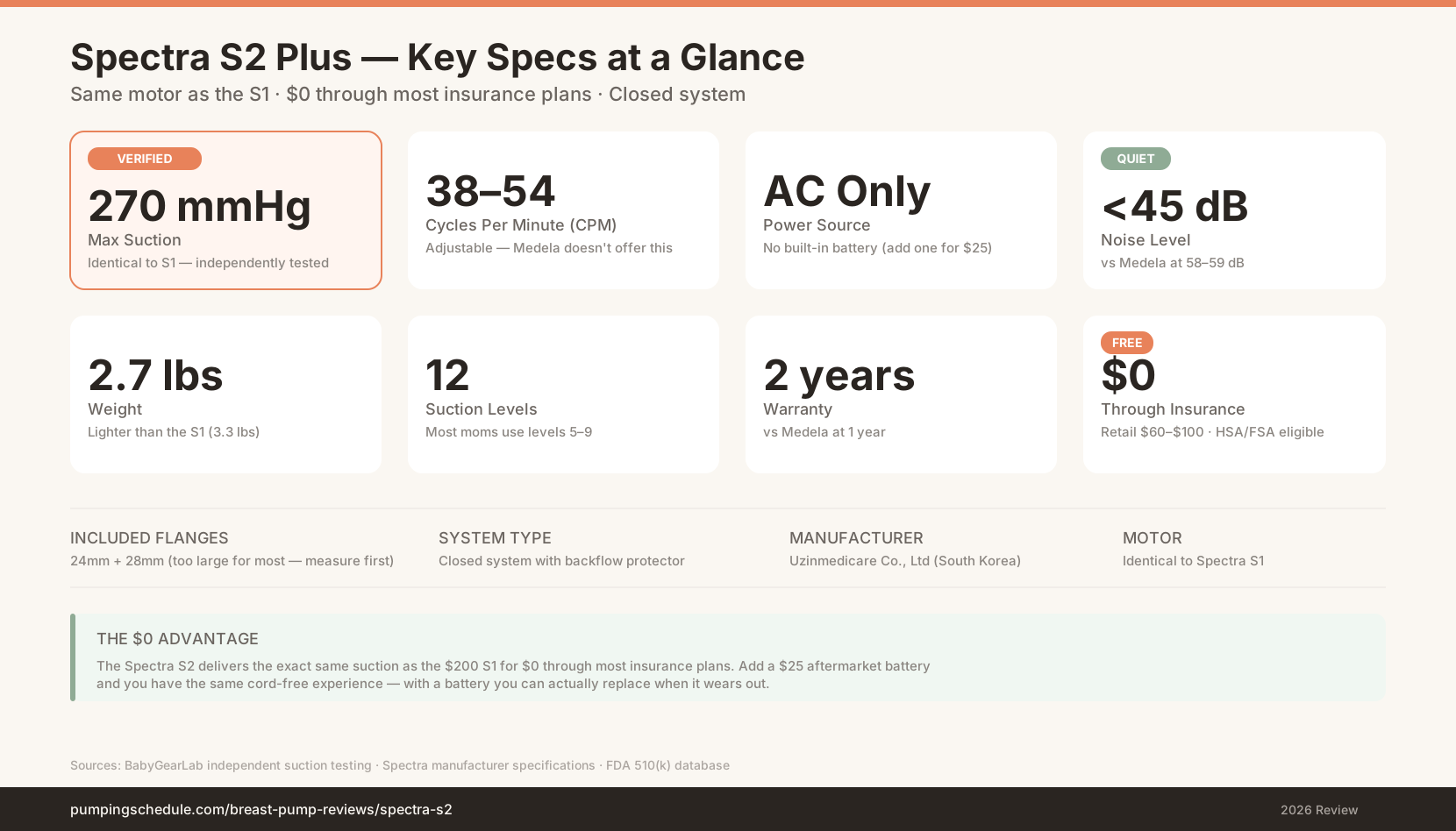
Everything in the box works out of the gate except the flanges. The 24mm and 28mm sizes are too large for the majority of women. Breast shield fit directly impacts milk output. Find your correct flange size, order from Maymom or Legendairy Baby, and have them ready before your pump arrives. Future you will not want to troubleshoot flange sizing at 3 AM on day four postpartum.
Suction Performance
The Spectra S2 pulls 270 mmHg — independently verified by BabyGearLab, not just a number on the box. To put that in context: the Medela Pump In Style tests at 160–230 mmHg depending on who's measuring. The Momcozy M5, the budget wearable everyone's talking about, caps around 180–200 mmHg. A free insurance pump pulling harder than pumps costing three to four times as much isn't supposed to happen, but here we are.
You won't use max suction. Levels 5 through 9 is where most moms land. The ceiling matters for power pumping sessions when you need aggressive emptying, and for the peace of mind that your pump has headroom beyond your daily setting.
The adjustable cycle speed is where the Spectra S2 creates real distance from the competition. A dial that moves between 38 and 54 CPM lets you match your body's natural letdown rhythm instead of hoping a pre-programmed mode gets close enough. Research on vacuum patterns and milk flow supports what EP moms have been saying on Reddit for years: control over rhythm improves output more than raw suction does.
The $0 Insurance Play
This is the Spectra S2's unfair advantage. Under the Affordable Care Act, most health insurance plans cover a breast pump at no cost. The Spectra S2 is one of the most universally covered models in the country — $0 out of pocket through almost every major insurer.
The process is simpler than it sounds. Contact a DME supplier — Aeroflow, Edgepark, 1 Natural Way, or Byram Healthcare — and give them your insurance info. They verify coverage, submit the claim, and ship the pump to your door. Most insurers let you order starting in your third trimester. Some need a prescription from your OB; others don't. The DME supplier tells you which.
Compare that to the Spectra S1, which requires a $30–$80 upgrade fee through insurance. Or the BabyBuddhaat $205–$230, rarely covered. Or any wearable over $170. The Spectra S2 gives you the strongest suction in the insurance-covered category, and it doesn't cost you a dollar.
Even if you pay retail ($60–$100), the S2 is HSA and FSA eligible. Replacement parts are too. At that price, some moms buy a second S2 to keep at a partner's house or grandparents' — cheaper than hauling the pump back and forth.
The Battery Pack Hack
This is the community tip that makes most Spectra S2 vs S1 arguments irrelevant.
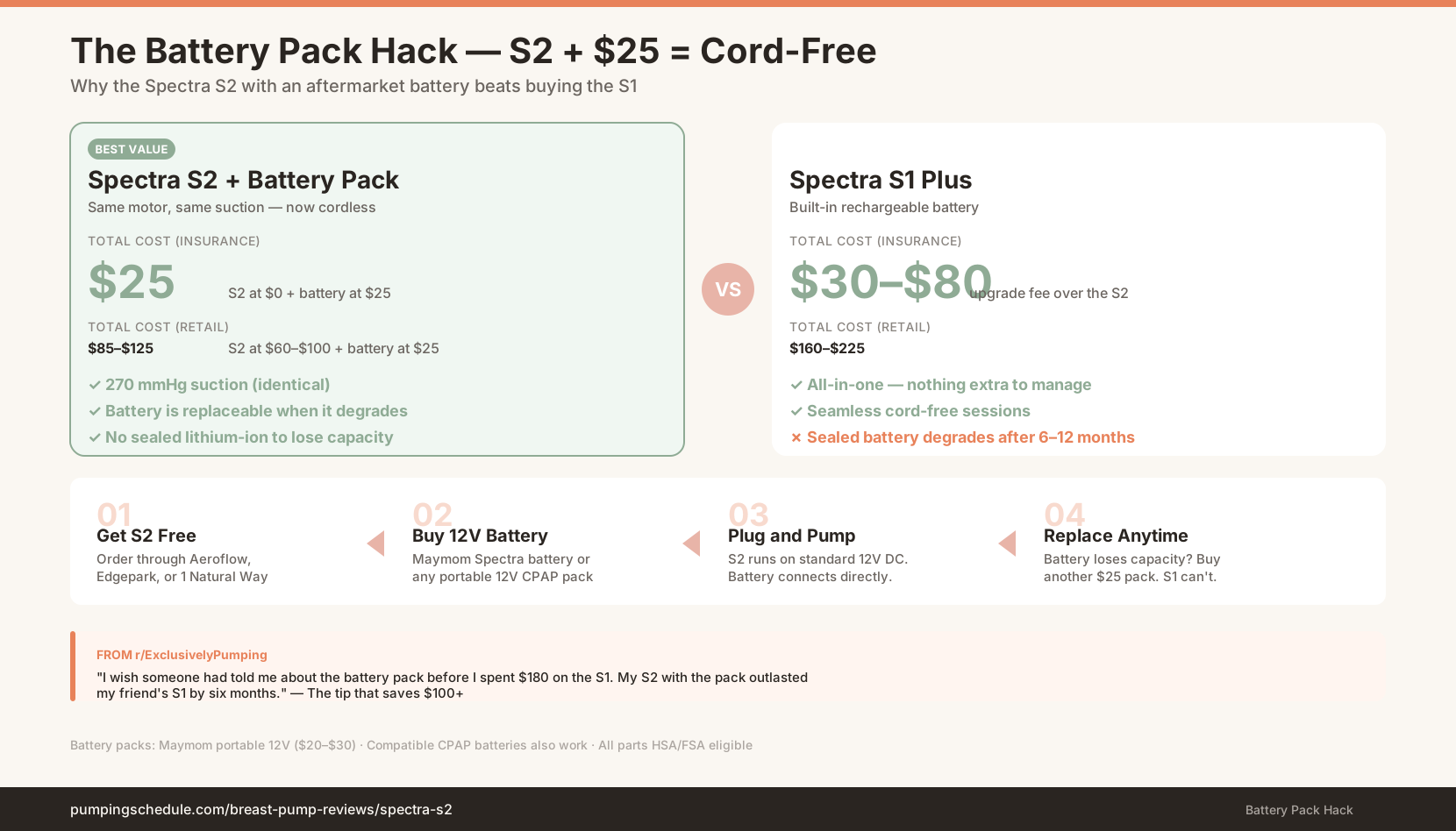
The Spectra S2 runs on a standard 12V DC adapter. A portable 12V battery pack — the kind sold for camping gear or CPAP machines — powers it wirelessly for $20–$30. Maymom sells a Spectra-specific battery in the same range.
The math: S2 through insurance ($0) + aftermarket battery ($25) = $25 total for the same cord-free experience as the S1. The S1 through insurance costs $30–$80. S1 at retail costs $160–$225. The S2 combo wins by triple digits.
The real advantage isn't even the savings. It's that the aftermarket battery is replaceable. When it loses capacity after a year of daily use, you buy another $25 pack. The S1's sealed lithium-ion battery degrades the same way — except you can't swap it. As one mom in r/ExclusivelyPumping put it: “I wish someone had told me about the battery pack before I spent $180 on the S1. My S2 with the pack outlasted my friend's S1 by six months.”
Fair trade-off: an external battery is one more thing to manage. Not as clean as a built-in. If you want seamless all-in-one portability and don't mind the premium, the S1 earns its price. For everyone else — and that's most people — the S2 plus a battery pack is the smarter buy.
Best Settings for Output
Same motor as the S1 means the same settings work. The Spectra S2 doesn't auto-switch between modes — you control the transition manually with the mode button. Watch your flow, not a timer.
| Phase | Cycle Speed | Suction Level | Duration |
|---|---|---|---|
| Letdown | 50–54 CPM | 3–4 | 1–3 min |
| Expression | 38–42 CPM | 5–7 | 12–20 min |
| Second letdown | 48–54 CPM | 3–5 | 2–3 min |
| Final expression | 38–44 CPM | 6–9 | 3–5 min |
Two lessons from months of tracking: your ideal suction level drifts upward over time — what felt strong at week two becomes comfortable by month three. And the cycle speed dial is the Spectra S2's most underappreciated feature. Moms who switch from a Momcozy or fixed-speed Medela notice the difference in their first session. Once you've fine-tuned rhythm to your letdown pattern, preset modes feel like wearing someone else's glasses.
Comfort and Noise
Under 45 dB — the same quiet operation as the S1. The Spectra S2 is library-quiet compared to the Medela Pump In Style at 58–59 dB. The gap sounds small in numbers. In practice, it's the difference between pumping on a Zoom call with your mic muted and everyone knowing you're pumping on a Zoom call.
The suction ramp is gentle. The S2 builds gradually from whatever level you set — no sudden jump that makes you flinch. Early postpartum, when tissue is sore and you're still learning what a pump feels like, this matters. Pain during pumping directly inhibits the oxytocin reflex and reduces output. A pump that startles you is a pump working against your biology.
The night light lives here too — not adjustable, not dimmable, just on or off. Some moms call it the best feature for 3 AM sessions. Others tape over it. Your household's light tolerance will determine which camp you join. (Both camps are passionate about this. Do not bring it up at a breastfeeding support group unless you have time.)
Spectra S2 vs S1: Quick Take
Same pump. One has a battery.
The Spectra S2 is lighter (2.7 lbs vs 3.3 lbs), cheaper ($0–$100 vs $160–$225), and has no battery to degrade over time. The S1 gives you built-in portability that's genuinely useful — middle-of-the-night pumps on the couch, room-to-room during the day, pumping in the car at the pediatrician's office.
If you pump untethered multiple times daily and value the seamlessness of one integrated unit, the S1 earns its premium. If you pump near outlets most of the time — and a $25 battery pack covers the exceptions — the S2 is the smarter financial decision by a wide margin.
Our full Spectra S1 vs S2 comparison has the complete breakdown.
Spectra S2 vs Medela vs Momcozy
Three pumps your insurance might cover. The Spectra S2 and Medela are tabletop electrics; the Momcozy M5 is a wearable. Different form factors, different compromises.
| Feature | Spectra S2 PlusBest for: value + suction | Medela Pump In StyleBest for: flange selection | Momcozy M5Best for: budget wearable |
|---|---|---|---|
| Price | $60–$100 (free w/ insurance) | $118–$180 (free w/ insurance) | $170–$200 |
| Weight | 2.7 lbs | ~2 lbs (motor) | ~8.8 oz (per cup) |
| Max Suction (Verified) | 270 mmHg | 160–230 mmHg | ~180–200 mmHg |
| Noise | <45 dB | 58–59 dB | ~45 dB |
| Battery | None (AC only) | AC only (AA pack optional) | Rechargeable (~90 min) |
| Cycle Speed | Adjustable, 38–54 CPM | Fixed (2-phase auto) | Fixed presets |
| Flange Range | 24–28mm (inserts to 13mm) | 15–36mm PersonalFit Flex | 17–24mm (with inserts) |
| Warranty | 2 years | 1 year | 1 year |
| Best For | Best value tabletop pump | Unusual flange sizes | Budget hands-free pumping |
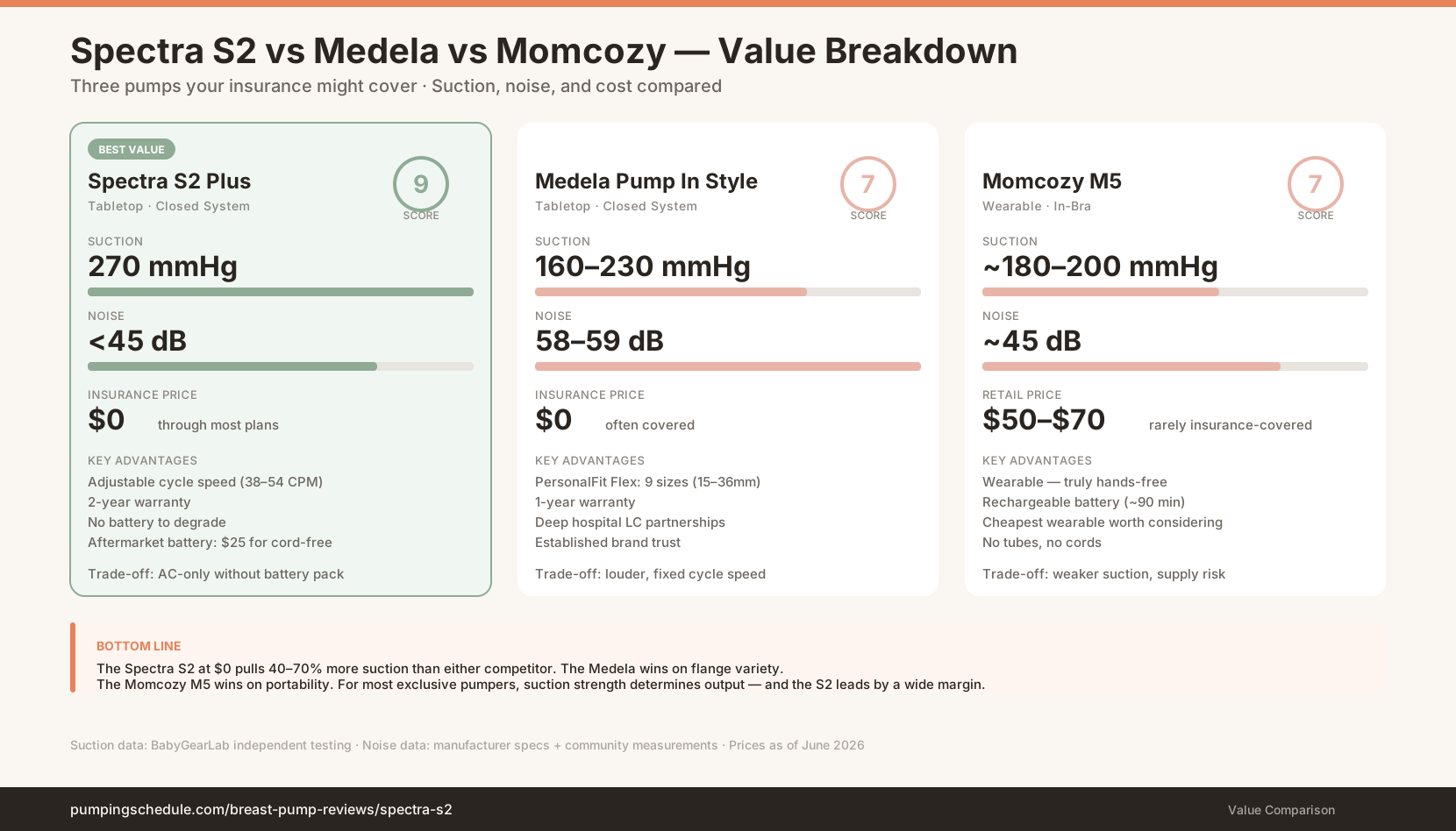
Spectra S2 wins on:suction power (by a wide margin), noise level, cycle speed control, warranty, and price-to-performance. No tabletop pump in the insurance-covered category matches the S2's combination of strength and adjustability.
Medela wins on:flange range. If you need a 15mm or 36mm flange, Medela's PersonalFit Flex has you covered out of the box. The Spectra requires aftermarket flanges for sizes below 24mm. Medela also has deeper hospital partnerships — if your LC is Medela-trained, their troubleshooting advice will be pump-specific.
Momcozy M5 wins on:portability and convenience. At $170–$200 it's pricier, but it's wearable — in-bra, hands-free, no tubing. The catch: IBCLCs flag the suction pattern as a potential long-term supply concern, and 180–200 mmHg won't empty as aggressively as 270 mmHg. Good as a secondary pump for pumping at work; risky as your only pump for exclusive pumping.
Parts and Maintenance
The Spectra S2 uses the same parts as the S1 — every valve, flange, tube, and bottle is cross-compatible. Aftermarket replacements from Maymom cost 40–60% less than Spectra-branded parts and work identically.
| Part | Replace Every | Signs It's Time | Cost |
|---|---|---|---|
| Duckbill valves | 4–6 weeks | Weak suction, valve doesn't snap back | $6–$10 / 4-pack |
| Backflow protectors | 2–3 months | Moisture inside housing | $8–$12 / pair |
| Tubing | 3–6 months | Condensation, discoloration | $5–$8 / set |
| Flanges | 6 months | Cloudiness, warping | $10–$18 / pair |
Duckbill valves are the part you'll replace most often and the part most responsible for “my pump lost suction” panic posts. They're a $2 silicone flap. Buy a multi-pack on day one and keep spares in your pump bag. As one poster in r/breastfeeding put it: “I was ready to throw the whole pump away until someone told me to replace the $2 valve. Fixed in 30 seconds.” The relief of realizing your pump isn't broken — just needs a new valve — is worth the $8 investment in advance.
One advantage the S2 has over the S1 in long-term maintenance: no battery to degrade. The S1's sealed lithium-ion battery loses capacity after 6–12 months of daily charging and can't be replaced by the user. The S2's motor has no equivalent wear point. Plug it in and it works the same on day 300 as day 1.
Common Problems and Fixes
These overlap heavily with the S1 — same internals, same quirks.
Suction weakening over weeks. Swap duckbill valves. This fixes it 80% of the time. If still weak: check the backflow protector membrane for tears, then inspect tubing for cracks. A full replacement kit costs under $25.
The included flanges are the wrong size for most women. If pumping hurts or output is low despite strong suction settings, flange fit is almost certainly the issue. Research confirms shield fit significantly affects output. Measure your nipple diameter, add 2–3mm, and order from Maymom or Legendairy Baby.
Cord is too short for your pumping setup. The stock AC adapter cord runs about 6 feet. If your outlet is behind the couch or across the room, a $10 12V extension cable from Amazon solves it. Or — the battery pack hack from earlier. Some moms buy the battery pack specifically because their outlet situation is bad, not because they need true portability.
Backflow protector getting wet inside? Disassemble and air-dry after every session. The silicone membrane needs to seat completely flat. A compromised seal means moisture reaches places that can grow mold. Replace the membrane — don't just dry it and hope.
Who Should (and Shouldn't) Buy It
Overall score
out of 10
What we like
- Usually $0 through insurance — best value breast pump available
- 270 mmHg suction — independently verified, stronger than most $200+ pumps
- Adjustable cycle speed (38–54 CPM) — fine-tune rhythm to your body
- Under 45 dB — quiet enough for shared spaces
- No battery to degrade — same performance on day 300 as day 1
- Lighter than the S1 at 2.7 lbs
- Closed system with backflow protector — no mold risk
- 2-year warranty, FDA Class II, universal aftermarket parts
What could be better
- Must be plugged in — zero portability without aftermarket battery ($20–$30)
- Cord limits where you can sit during sessions
- Ships with oversized flanges (24mm/28mm) — most moms need 15–21mm
- Only available in pink (functional, not aesthetic — but moms have strong opinions)
- External battery pack is less elegant than the S1's built-in
- No Bluetooth or app connectivity
Related Reading
- Spectra S1 vs S2 — Full Side-by-Side Comparison
- Spectra S1 Plus Review — Real Suction, Battery & Parts Data
- Exclusive Pumping Schedule — Complete Guide by Baby's Age
- Best Breast Pumps (2026) — 6 Pumps Ranked
- Pumping Schedule by Age — Month-by-Month Breakdown
- Best Hospital Grade Breast Pumps (2026)