
Your coworker swears by it. Three different Reddit threads called it “the only pump worth buying.” Your insurance company lists it as an upgrade option for forty bucks. The Spectra S1 Plus shows up everywhere a new or expecting mom looks for breast pump advice — and most of what you'll read about it is either a thinly disguised affiliate pitch or a spec sheet rewritten in paragraph form.
This Spectra S1 review is neither. We tracked real performance over six months of exclusive pumping — daily sessions, battery degradation, valve replacements, the settings that actually moved the needle on output. The stuff that matters after the unboxing glow fades.
What Is the Spectra S1 Plus?
A double electric breast pump made by Uzinmedicare Co., Ltd in South Korea. FDA Class II medical device. Closed system with a backflow protector that keeps milk out of the tubing and motor — which means it can't grow mold in places you can't clean.
The naming gets confusing fast. Spectra sells the S1, the S1 Plus, the S1 Pro, and the S1 Gold. The S1 Plus is the current standard model that most insurance companies cover. If someone just says “Spectra S1,” they almost certainly mean the S1 Plus — the blue one.
The Spectra S1 shares an identical motor with the Spectra S2. Same suction. Same controls. Same adjustable cycle speed. The only hardware difference is a rechargeable lithium-ion battery inside the S1 that the S2 doesn't have. Every performance claim in this review applies equally to both pumps — the S1 just does it without a cord.
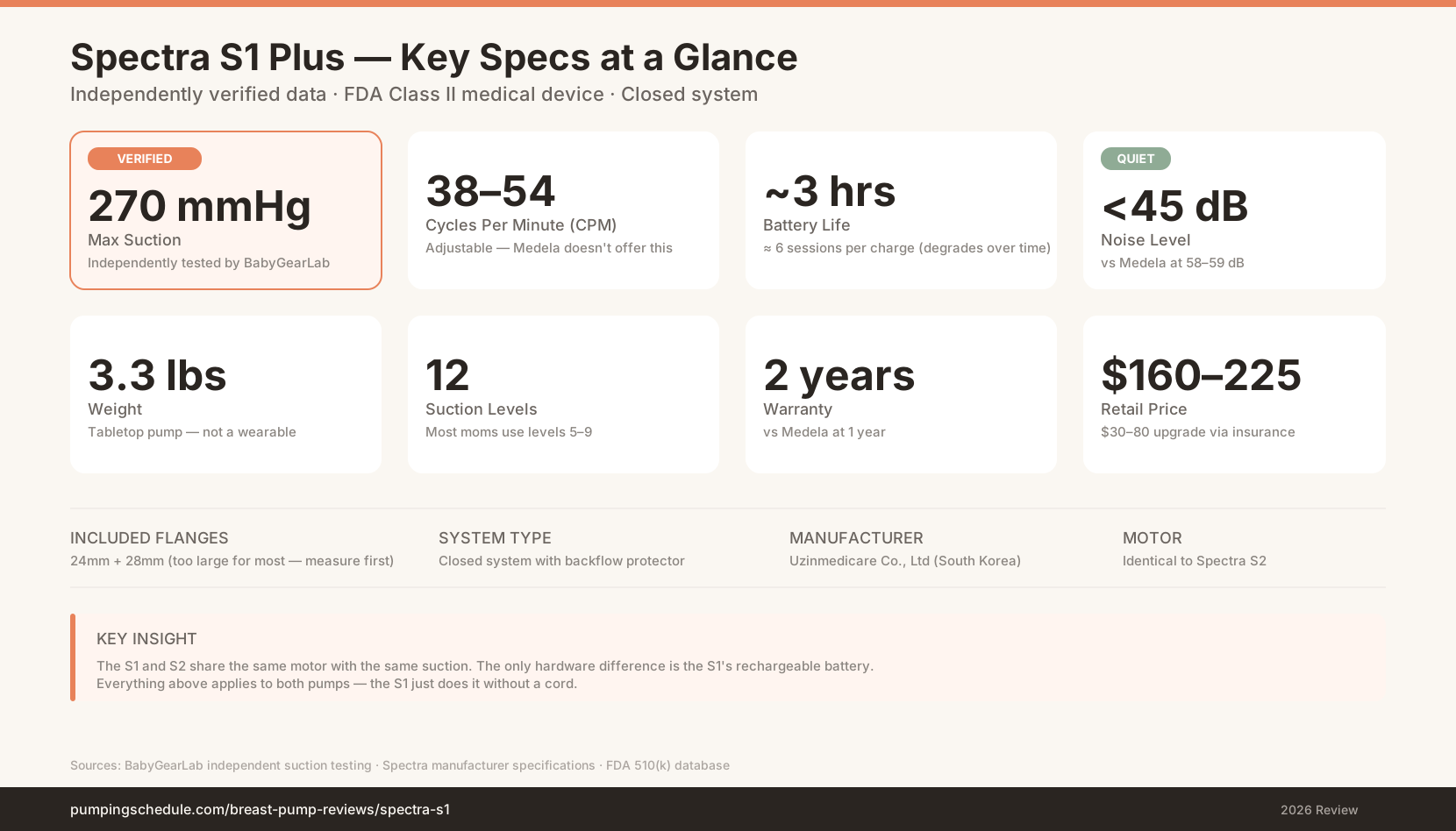
Key Specs and What's in the Box
The numbers that matter — including a few Spectra's marketing skips over.
| Product Name | Spectra S1 Plus |
|---|---|
| Manufacturer | Uzinmedicare Co., Ltd (South Korea) |
| FDA Status | Class II medical device |
| System Type | Closed system with backflow protector |
| Max Suction | 270 mmHg (independently verified) |
| Suction Levels | 12 |
| Cycle Speed | Adjustable, 38–54 CPM (letdown + expression) |
| Battery | Rechargeable lithium-ion, ~3 hours active pumping |
| Weight | 3.3 lbs (1.5 kg) |
| Display | LCD with session timer and night light |
| Flanges Included | 24mm and 28mm |
| Noise | <45 dB |
| Warranty | 2 years |
| Retail Price | $160–$225 |
| Insurance Price | $30–$80 upgrade fee (S2 is usually $0) |
| In the Box | Motor unit, 2 flanges (24mm + 28mm), 2 bottles, tubing, backflow protectors, duckbill valves, AC adapter, carrying bag |
The box arrives with everything you need for your first session except correctly sized flanges. The included 24mm and 28mm are too large for most women. Research confirms that breast shield fit significantly affects milk output — measure your flange size and order the right one from Maymom or Legendairy Baby before the pump arrives. Your future self pumping at 4 AM will not want to troubleshoot flange fit.
Real Suction Performance
The Spectra S1's 270 mmHg max suction has been independently verified by BabyGearLab. That number puts it in the top tier of personal-use pumps — stronger than the Medela Pump In Style (160–230 mmHg in independent testing) and on par with hospital-strength output. Only the BabyBuddha at ~290 mmHg pulls harder, and it does it in a package the size of a hockey puck.
But max suction is a ceiling, not a target. Most moms using the Spectra S1 settle between levels 5 and 9. Cranking to 12 doesn't empty faster — it just hurts. Pain during pumping inhibits the oxytocin reflex and directly reduces milk output. The sweet spot is the highest level that feels like firm tugging without discomfort.
What actually sets the Spectra S1 apart from most pumps in its price range is the adjustable cycle speed — 38 to 54 CPM, controllable with a dial. At 54 CPM, you mimic the quick, fluttery suck that triggers letdown. Drop to 38 CPM and you match the slower, deeper rhythm of active feeding. Research on vacuum patterns and milk flow supports the idea that matching pump rhythm to your body's response improves output. Medela doesn't offer this. Once you've used a dial instead of fixed presets, going back feels like driving without a gear shift.
For power pumping sessions where you need aggressive emptying, the headroom at 270 mmHg matters. You can push harder during power pumps than your normal sessions, cycling between letdown and expression modes, and still have room before hitting maximum.
Battery Life and Portability
This is the feature you're paying for — the only thing separating the Spectra S1 from the S2. So let's be precise about what you get.
Fresh out of the box: roughly three hours of active pumping per charge. That translates to about six 25–30 minute sessions before you need to plug in. For a mom on a standard exclusive pumping schedule of seven to eight sessions daily, you'll charge every day.
After six months of daily EP use:the battery tells a different story. Lithium-ion batteries degrade with repeated charge cycles — the same physics that makes your phone hold less charge every year. EP moms charging daily report the S1's capacity dropping to under two hours by month eight or nine. One mom in r/ExclusivelyPumping summed it up: “My S1 went from three hours to barely one hour after eight months of EP. It's basically an S2 now, except I paid double.”
The battery is sealed.You cannot replace it yourself. Spectra doesn't sell replacement batteries. If the battery dies outside of the two-year warranty, your $200 portable pump becomes a corded pump that weighs more than the S2. (Some enterprising moms on YouTube have opened the housing and soldered in replacement cells. We're not recommending that for an FDA-regulated medical device.)
Portability is relative.At 3.3 pounds, the Spectra S1 is not a wearable. It's not a pump you clip to your bra and walk around with — that's the Willow Go or Elvie Stride territory. The S1 is a tabletop pump that happens to not need a wall outlet. Room-to-room at home? Great. Kitchen while supervising a toddler? Perfect. Middle-of-the-night sessions on the couch without hunting for a cord? That's the S1's sweet spot.
Best Settings for Maximum Output
Every Spectra S1 review tells you the pump has 12 levels and two modes. None of them tell you what to actually set them to. So here's what worked after six months of tracking output at different settings.
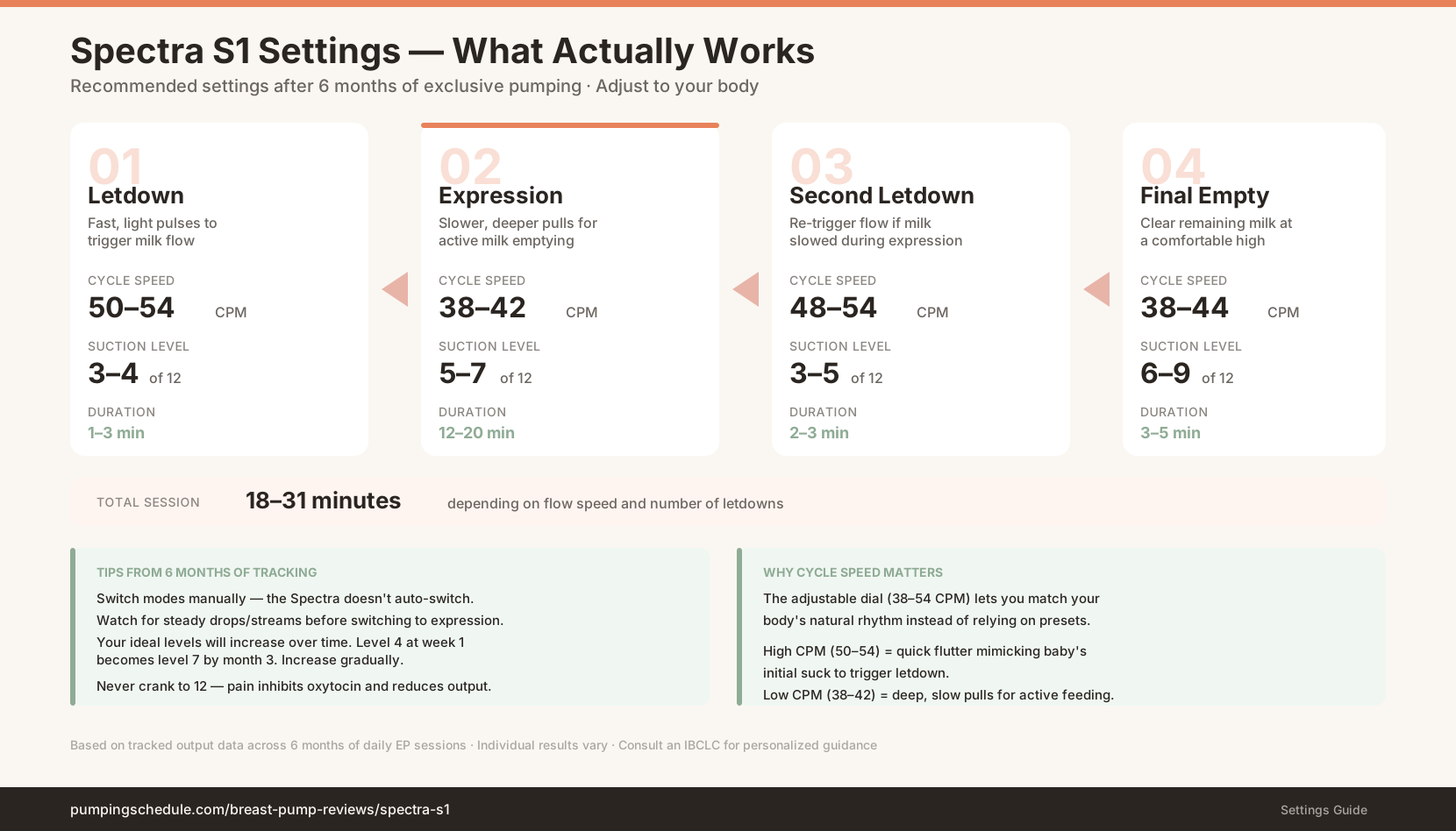
| Phase | Cycle Speed | Suction Level | Duration | What's Happening |
|---|---|---|---|---|
| Letdown | 50–54 CPM | 3–4 | 1–3 min | Fast, light pulses trigger letdown reflex |
| Expression | 38–42 CPM | 5–7 | 12–20 min | Slower, deeper pulls for active emptying |
| Second letdown | 48–54 CPM | 3–5 | 2–3 min | Triggers another letdown if flow slowed |
| Final expression | 38–44 CPM | 6–9 | 3–5 min | Empty remaining milk at a comfortable high |
Two things that took weeks to figure out the hard way. First: the transition from letdown to expression mode isn't automatic on the Spectra S1, unlike some Medela models. You control it manually with the mode button. Watch your flow — when you see steady drops or streams (not just beading at the nipple), switch. Second: your ideal settings shift over time. Early postpartum, level 4–5 felt strong. By month three, level 7–8 was the new normal. Your body adjusts. Increase gradually.
The cycle speed dial is why a lot of EP moms stay loyal to Spectra after trying other pumps. A mom who switches from a Momcozy M5 to the Spectra S1 can fine-tune the rhythm to match her letdown pattern instead of hoping a preset mode works.
Comfort and Noise
The Spectra S1 is measured at under 45 dB — roughly the volume of a quiet office or a refrigerator hum. The Medela Pump In Style runs 58–59 dB, which is normal conversation volume. That gap matters more than the numbers suggest. Under 45 dB lets you pump during a Zoom call on mute without anyone noticing. At 59 dB, they notice.
Comfort-wise, the Spectra S1's suction ramp is gradual. Unlike the BabyBuddha, which hits hard from level 1 and will make a first-time pumper flinch, the Spectra builds up gently. Early postpartum, when everything is sore and your body is learning what a pump feels like, this gentleness isn't a luxury — it's functional. Moms who tense up from sudden strong suction trigger less oxytocin, which means less milk. The S1's ramp gives your body time to cooperate.
The night light is polarizing. It's not adjustable — either on or off. Some moms tape over it. Others consider it the best feature on the entire pump for 3 AM sessions when turning on a lamp would wake the baby in the next room. No middle ground. (Much like pineapple on pizza, you pick a side and commit.)
Spectra S1 vs S2: Quick Take
Same motor. Same 270 mmHg. Same 12 levels. Same adjustable cycle speed. Same closed system. Same flanges, tubing, valves. Same warranty. The Spectra S1 vs S2 decision is a one-variable equation: do you need a built-in battery?
The S2 retails for $60–$100 and is typically free through insurance. The S1 runs $160–$225 retail, or $30–$80 through insurance as an upgrade. The price delta buys you cord-free convenience — real convenience, not marketing convenience — for about six to twelve months before the battery starts degrading.
A $20–$30 aftermarket battery pack (Maymom or any 12V portable battery) gives the S2 the same portability with a battery you can actually replace when it wears out.
We wrote an entire Spectra S1 vs S2 comparison if you want the full breakdown. The short version: most moms should get the S2 for free and spend the savings on correctly sized flanges.
Spectra S1 vs Medela vs BabyBuddha
The three pumps that come up in every “which pump should I buy” thread. Different strengths, different trade-offs.
| Feature | Spectra S1 PlusBest for: cord-free home use | Medela Pump In StyleBest for: flange selection | BabyBuddha 2.0Best for: maximum suction |
|---|---|---|---|
| Price | $160–$225 | $118–$180 (free w/ insurance) | $205–$230 |
| Weight | 3.3 lbs | ~2 lbs (motor) | 6.8 oz |
| Max Suction (Verified) | 270 mmHg | 160–230 mmHg | ~290 mmHg |
| Noise | <45 dB | 58–59 dB | 42–60 dB |
| Battery | ~3 hours rechargeable | AC only (AA pack optional) | ~60 min rechargeable |
| Cycle Speed | Adjustable, 38–54 CPM | Fixed (2-phase auto) | Adjustable |
| Flange Range | 24–28mm (inserts to 13mm) | 15–36mm PersonalFit Flex | 13–24mm (with inserts) |
| Warranty | 2 years | 1 year | 2 years |
| Best For | Cord-free home + travel pumping | Insurance-covered first pump | Maximum portable suction |
Spectra S1 wins on:suction-to-noise ratio (strong and quiet), adjustable cycle speed, battery life (3 hours vs BabyBuddha's 60 minutes), warranty length, and comfort during long sessions. The gentle suction ramp makes it the best of these three for early postpartum or sensitive tissue.
Medela wins on: flange variety. PersonalFit Flex comes in nine sizes from 15mm to 36mm — the widest range from any pump manufacturer. If unusual flange sizing is your primary challenge, Medela solves it out of the box. Also universally covered by insurance at $0.
BabyBuddha wins on:raw suction power and true portability. At 6.8 ounces, it fits in a pocket. At ~290 mmHg, it empties faster than anything this size. The trade-off is a 60-minute battery and a suction onset that's aggressive enough to startle you the first time.
Many EP moms end up owning two pumps — a Spectra S1 at home for comfortable daily sessions, and a BabyBuddha or Elvie Stride for pumping at work. Your body doesn't care which brand is attached — it responds to demand.
Spectra S1 Parts Guide
The Spectra S1 uses the same parts as the S2 — every accessory, valve, and flange is cross-compatible. This matters because aftermarket Spectra S1 parts are significantly cheaper than Spectra-branded replacements, and they're sold everywhere.
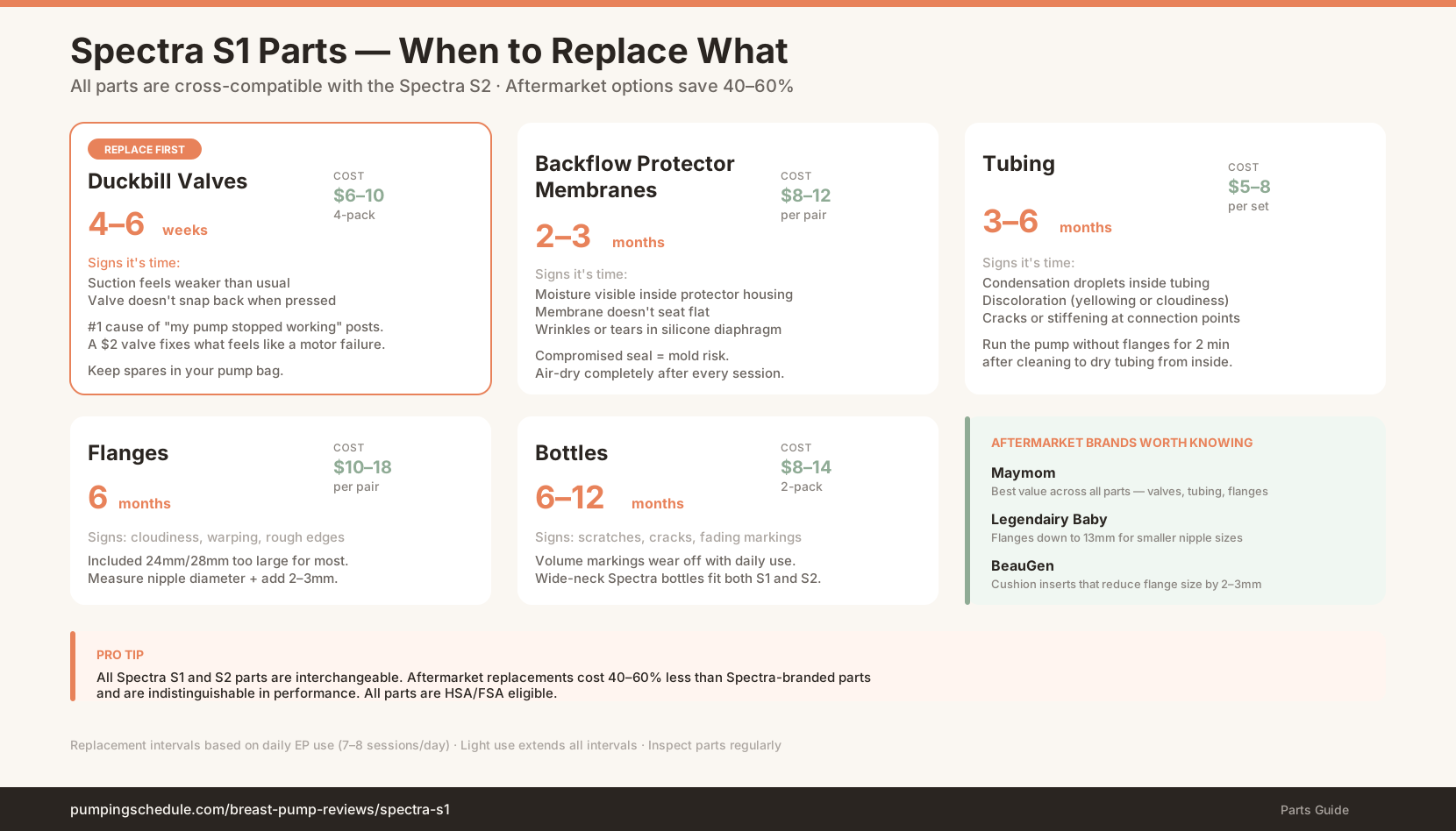
| Part | Replace Every | Signs It's Time | Approx. Cost |
|---|---|---|---|
| Duckbill valves | 4–6 weeks | Suction feels weaker, valve doesn't snap back | $6–$10 / 4-pack |
| Backflow protector membranes | 2–3 months | Moisture inside the protector housing | $8–$12 / pair |
| Tubing | 3–6 months | Condensation inside, discoloration, cracks | $5–$8 / set |
| Flanges | 6 months | Cloudiness, warping, rough edges | $10–$18 / pair |
| Bottles | 6–12 months | Scratches, cracking, volume markings fading | $8–$14 / 2-pack |
The number one cause of “my pump stopped working” posts:worn duckbill valves. Not a motor failure. Not a battery issue. A $2 silicone flap that's lost its seal. Keep spares in your pump bag. (Your 2 AM self will be grateful.) Maymom duckbill valves for Spectra run under $10 for a four-pack and are indistinguishable from the originals.
Aftermarket brands worth knowing: Maymom (best value across all parts), Legendairy Baby (flanges down to 13mm), and BeauGen (cushion inserts that reduce effective flange size by 2–3mm while adding comfort). All work with the Spectra S1 without modification.
Getting the Spectra S1 Through Insurance
The Affordable Care Act requires most health insurance plans to cover a breast pump at no cost. Both Spectra models qualify. The difference: the Spectra S2 is almost universally covered at $0 out of pocket, while the Spectra S1 is classified as an upgrade — expect a copay of $30–$80.
How to order:Contact a DME (durable medical equipment) supplier. Aeroflow, Edgepark, 1 Natural Way, and Byram Healthcare all handle the insurance paperwork. You provide your insurance info, they verify coverage, submit the claim, and ship the pump to you. Most insurers let you order during your third trimester — some require a prescription from your OB, others don't. Both the S1 and any upgrade fee qualify for HSA and FSA funds, which effectively reduces out-of-pocket cost by 20–30% depending on your tax bracket. Aftermarket parts (flanges, valves, tubing) are HSA/FSA eligible too.
The math to consider: Spectra S1 through insurance at a $50 upgrade fee vs. Spectra S2 at $0 + a $25 aftermarket battery pack. You save $25, get a replaceable battery, and identical pumping performance. The S1 wins on elegance — one unit, no extra parts. The S2 combo wins on cost and long-term reliability.
Common Problems and Fixes
Six months of daily use surfaced every issue the Spectra S1 throws at you. Most are fixable in under five minutes.
Suction getting weaker over weeks. Swap your duckbill valves first — this fixes the problem 80% of the time. If suction is still weak, check the backflow protector membrane for tears or improper seating, and inspect tubing for cracks or moisture. Replace in that order: valves → membrane → tubing. A full replacement kit runs under $25.
Battery draining faster than expected. Under six months old? Could be defective — file a warranty claim with Spectra. Over six months with heavy daily use? Normal lithium-ion degradation. You can extend battery life by pumping plugged in whenever possible and only using battery when you actually need cord-free mobility.
Flanges hurt or output is low despite strong suction. Wrong flange size — almost certainly too large. The included 24mm and 28mm flanges fit a minority of women. Properly fitted breast shields significantly improve milk output. Measure your nipple diameter (nipple only, not areola) and add 2–3mm. Most moms need 15–21mm. The areola should not be pulled into the tunnel during pumping.
Backflow protector getting wet inside. Disassemble and air-dry completely after every session. The white silicone diaphragm needs to seat flat with no wrinkles. Moisture inside the protector means the membrane seal is compromised — replace the membrane before mold becomes a risk.
EP communities call it “slacker boob” — one side that consistently produces less than the other. It's not the pump. Breast asymmetry in milk production is well-documented in lactation literature. The Spectra S1 lets you run independent suction per side, so bump the slower side up one or two levels. Some moms start on the weaker side first when letdown is strongest.
Who Should (and Shouldn't) Buy It
Overall score
out of 10
What we like
- 270 mmHg suction — independently verified, stronger than most personal pumps
- Built-in rechargeable battery for true cord-free pumping (~3 hours)
- Adjustable cycle speed (38–54 CPM) — fine-tune rhythm to your body
- Under 45 dB — quiet enough for Zoom calls on mute
- Gentle suction ramp — comfortable for early postpartum and sensitive tissue
- Closed system with backflow protector — no mold risk in motor or tubing
- 2-year warranty and FDA Class II classification
- Universal parts compatibility — cheap aftermarket replacements everywhere
What could be better
- Battery degrades after 6–12 months of heavy EP use — non-replaceable
- $97+ more than the identical S2 for only a battery difference
- Insurance usually requires $30–$80 upgrade fee
- Ships with oversized flanges (24mm/28mm) — most moms need 15–21mm
- 3.3 lbs — not a true portable pump, still lives on a table
- Night light is not adjustable (love it or tape over it)
Related Reading
- Spectra S1 vs S2 — Full Side-by-Side Comparison
- Exclusive Pumping Schedule — Complete Guide by Baby's Age
- Best Breast Pumps (2026) — 6 Pumps Ranked
- Pumping Schedule by Age — Month-by-Month Breakdown
- Best Hospital Grade Breast Pumps (2026)