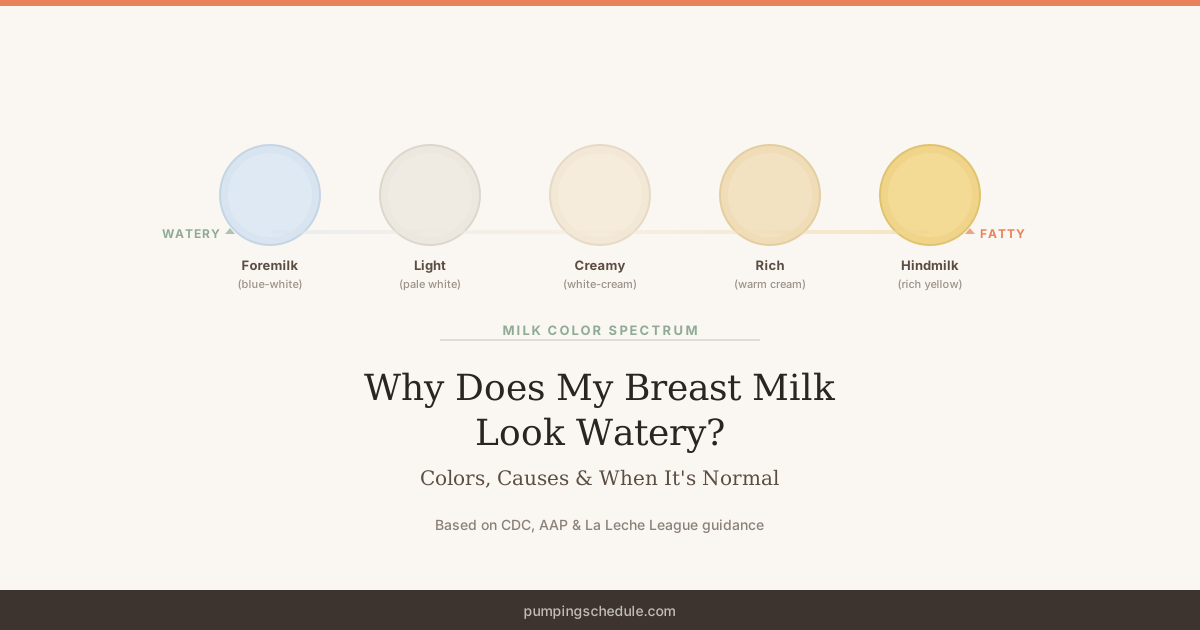
You just pumped a bottle and the milk looks thin, bluish, almost translucent. Maybe you held it up to the light and thought: is something wrong with my milk? Nothing is wrong. That watery breast milk is foremilk — the lighter milk that flows at the start of a session. Not a sign of low quality, not a supply problem. Your body is doing exactly what it should.
Is Watery Breast Milk Normal?
Almost always, yes. Your milk shifts appearance throughout a single pumping session, across the day, and week to week as your baby grows. What the milk looks like in the bottle tells you almost nothing about what it delivers to your baby.
The CDC notes that breast milk composition adjusts to meet your baby's changing nutritional and immunological needs. The same breast can produce watery-looking milk at 6 AM and thick, creamy milk at 9 PM — both normal, both nutritionally complete.
Here is a quick reference for breast milk color and what it means:
- Blue-white or translucent — foremilk. Higher in water and lactose, lower in fat. Completely normal.
- Creamy yellow or white — hindmilk. Fattier milk that comes later as your breast empties.
- Green tint— usually leafy greens (spinach, kale), iron supplements, or certain medications. Your milk is not going bad; your salad is just showing up. If your baby's diapers are also green, check our breastfed baby green poop guide — the causes often overlap.
- Pink or rust-colored— a small amount of blood, often from cracked nipples or “rusty pipe syndrome” in the early days. Usually normal, but call your provider if it lasts more than a few days.
- Brown — old blood mixed with milk. Less common and worth a call to your doctor.
For the full breakdown of each shade — including when to see a doctor — check our breast milk color guide. Worried about volume rather than color? Our guide to how often to pump can help you figure out whether your session frequency is on track.
Foremilk vs Hindmilk — Why the First Ounces Look Thin
The single biggest reason your breast milk looks watery: the foremilk-hindmilk continuum. Not a switch that flips mid-session — a gradual shift from thinner to fattier milk.
Between sessions, fat globules stick to the walls of your milk ducts. La Leche League explains that when you start pumping, the first milk out is lower-fat foremilk sitting closest to the nipple. As your letdown continues and the breast empties, fat gets pulled off the duct walls into the milk stream. Result: hindmilk at the end of a session looks noticeably creamier.
The longer the gap between sessions, the bigger the visual difference. Your first pump of the morning — after five or six hours of sleep — often looks the most watery because your breasts are full and there is a lot of foremilk ahead of the fat. Two hours later? Often much creamier from the start.
This is why moms on an exclusive pumping schedule sometimes see wild variation between bottles. One looks like skim milk, the next like melted vanilla ice cream. Both are perfectly fine. (Your pump does not care about aesthetic consistency, and neither should you.)
If you consistently stop pumping before your breast fully empties, you will collect foremilk-heavy bottles. That does not mean poor milk quality — it means you may want to pump for a full session to get a more balanced mix in each bottle. Spectra and Medela both recommend 15-20 minute sessions for this reason. For a deeper dive into how this gradient works and what it means for your bottles, see our complete foremilk vs hindmilk guide.
Other Reasons Your Milk Looks Watery
Foremilk is the most common explanation, but a few other factors play a role:
Hydration.Drinking more water does not “dilute” your milk — that is not how lactation works. But well-hydrated moms sometimes notice slightly higher volume with a more translucent appearance. The nutritional content stays the same. The AAP's breastfeeding guidance confirms that maternal hydration affects volume more than composition.
Time of day. WHO data on breast milk composition documents that fat concentration can vary two- to threefold across a 24-hour cycle. Your milk is not broken — it is recalibrating to your baby's rhythms, one session at a time.
Storage and separation. Pumped breast milk is not homogenized. In the fridge, fat floats to the top and the watery portion settles below. That separated look is physics, not spoilage. Swirl gently before feeding. For more on fridge and freezer storage, see our breast milk storage guidelines.
Early postpartum transition. Colostrum — the thick, golden milk from the first few days — gives way to transitional milk and then mature milk over two to three weeks. Mature milk looks dramatically thinner. First-time moms sometimes panic at this shift, but mature milk is higher in volume and perfectly matched to your growing baby.
Does Watery Milk Mean Less Nutrition?
No. Watery-looking breast milk is not nutritionally inferior. This is the fear behind the question, and it deserves a flat answer.
Foremilk is lower in fat but higher in lactose and water-soluble vitamins. Your baby needs both. Over a full feeding or a full day of bottles, the ratio balances out — even thin-looking milk still delivers roughly 20 calories per ounce. The AAP and every major health organization measure breastfeeding adequacy by weight gain and diaper output — not by how the milk looks in a bottle.
“I spent weeks thinking my milk was too thin because it looked like skim milk compared to other moms' freezer stash photos. My IBCLC told me to stop comparing bottles and start counting diapers. Baby was gaining fine.” (paraphrased from r/ExclusivelyPumping, 2025)
Weight checks are the real metric. If your pediatrician is happy with the growth curve, the milk is doing its job — regardless of how it photographs. (Nobody is judging your milk's Instagram aesthetic. Least of all your baby.)
If you consistently pump short sessions, you may collect more foremilk than hindmilk. The fix: pump longer, not more often — and use breast compressions to increase fat content. Our guide on how long to pump covers session timing. And if you are working on building supply, the pumping schedule to increase milk supply walks through frequency and duration targets backed by research.
When to Talk to a Lactation Consultant
Most of the time, watery breast milk needs zero intervention. But reach out to an IBCLC or your pediatrician if:
- Your baby is not gaining weight as expected. The clearest signal that intake needs evaluation — and it is about volume, not milk appearance.
- Persistent green, frothy stools plus fussiness and gas after feeding. This pattern can point to a foremilk-hindmilk imbalance that a lactation consultant can address through session timing changes. If your baby seems gassy and fussy at feeding time, flow rate and feeding position matter more than what the milk looks like in the bottle.
- Pink, red, or brown milk that persists beyond the first week postpartum. A bit of blood early on is common (rusty pipe syndrome), but ongoing discoloration deserves a check.
- A lump, fever, or redness on your breast along with changes in your milk. These can signal mastitis or a clogged duct.
For everything else — the bluish tint, the translucent morning bottle, the milk that looks nothing like yesterday's — take a breath. Your body adjusts composition session by session, day by day. That variation is a feature, not a flaw.
“My LC said something that stuck with me: 'If your baby is peeing, pooping, and growing, your milk is exactly right — even if it looks like water.'” (paraphrased from r/breastfeeding, 2024)
Last reviewed: June 2026 by the Pumping Schedule Editorial Team. Read our editorial standards.