It is 4 AM. You snoozed your pump alarm three hours ago — completely understandable — and now your breasts feel like overfilled water balloons duct-taped to your ribcage. Your Medela flanges will not seal because the swelling has changed the geometry of everything. Letdown? Not happening. You are standing in your kitchen, one hand on your chest, the other Googling “engorgement remedies” while trying not to cry.
The fix might be in your crisper drawer. Using cabbage leaves for engorgement sounds like something your grandmother made up, right next to “put butter on a burn.” Except this one actually has research behind it.
This guide is for pumping moms specifically. Engorgement hits differently when your schedule revolves around a machine — missed sessions during a schedule transition, oversupply while following an exclusive pumping schedule, or the first brutal days of weaning from the pump. Cabbage works for all of it.
Why Cabbage Leaves Work for Engorgement
This is not just a cold compress that happens to be leaf-shaped (though the shape is oddly perfect). Green cabbage contains glucosinolates and flavonoids — sulfur-based compounds with anti-inflammatory properties. Crush a chilled leaf and press it against swollen breast tissue and two things happen at once:
- Cold therapy reduces swelling. Chilled leaves pull heat from inflamed tissue and constrict blood vessels, slowing fluid buildup. Same idea as icing a sprained ankle — but the leaf molds to your breast better than a bag of frozen peas ever could.
- Plant compounds reduce inflammation locally. The NIH LactMed database notes that topical cabbage leaf application has been used to treat breast engorgement and mastitis, with anti-inflammatory compounds absorbed through direct skin contact.
The ergonomics matter.
A cabbage leaf naturally cups around a breast without bunching or slipping — try getting a rigid ice pack to do that while you chase a toddler. La Leche League calls cabbage leaves a “can't hurt, might help” remedy — which, in lactation-advice terms, is practically a standing ovation. KellyMom's engorgement guide similarly recommends chilled cabbage as a low-risk, accessible engorgement remedy.
What the Research Actually Says
Honesty first: the evidence is promising, not overwhelming. Several randomized controlled trials have studied cabbage leaves, and results are consistently positive for pain relief — with more debate about whether they outperform other cold therapies for engorgement relief overall.
- Pain relief is well-supported. Multiple trials show that women using chilled cabbage leaves reported less breast pain than control groups. The NIH LactMed review summarizes that cabbage leaf application decreased breast pain and hardness across several studies.
- Comparable to gel packs. Researchers compared chilled cabbage leaves to cold gel packs like Lansinoh TheraPearl — both reduced engorgement symptoms. Cabbage was not dramatically superior, but it was not inferior either. And it costs about $2 for an entire head. (Your insurance will not reimburse the cabbage. We checked.)
- No confirmed effect on supply. Short-term use did not measurably reduce milk production in any published trial. The supply worry comes from anecdotal reports of extended, continuous use — not from the 20-minute sessions practitioners recommend.
So cabbage leaves for engorgement reliably reduce pain and breast hardness. Whether the mechanism is anti-inflammatory compounds, excellent cold-compress engineering, or both — your chest feels better, and that is the part that matters at 4 AM.
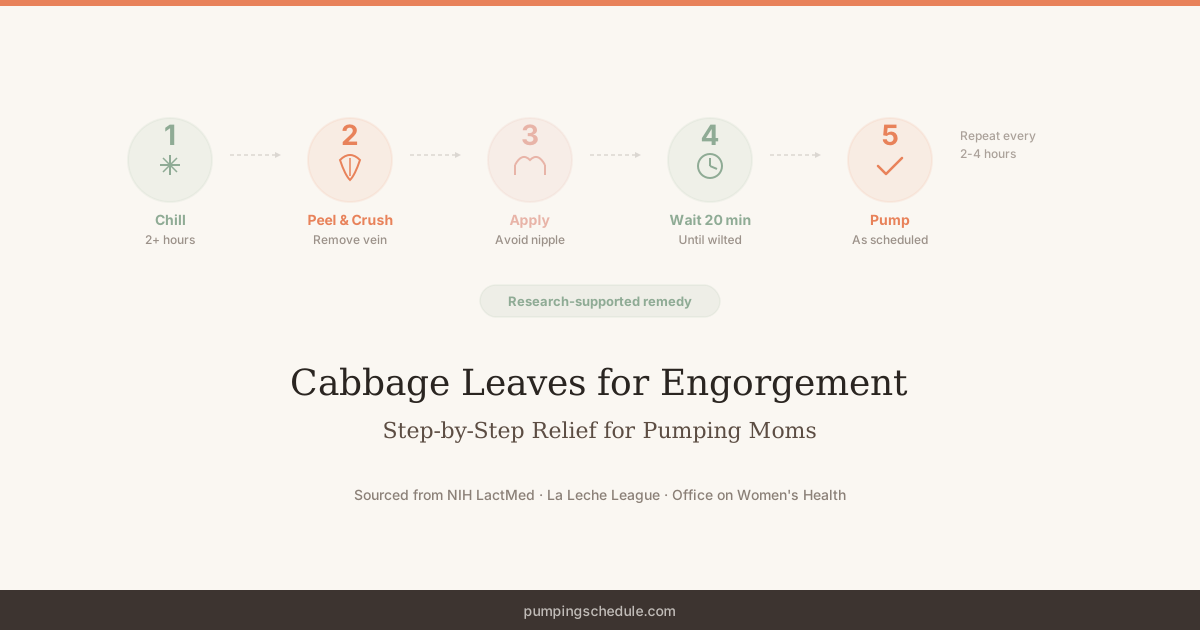
How to Use Cabbage Leaves: Step by Step
You need a head of green cabbage and a refrigerator. That is the entire supply list.
- Buy a head of green cabbage. Conventional is fine — you are wearing it, not eating it. (Though you could make coleslaw with the leftovers. Multitasking.)
- Refrigerate at least 2 hours. Room-temperature cabbage is just a salad ingredient.
- Peel off individual leaves. Skip the tough outer ones. You want leaves large enough to cover your breast but pliable enough to mold around it.
- Cut out the hard center vein. That thick ridge prevents the leaf from lying flat. Removing it lets the leaf cup naturally around swollen breast tissue.
- Crush the leaf gently. Roll it between your palms or bend it in several places to break the cell walls and release the anti-inflammatory compounds.
- Place over your breast, avoiding the nipple. Cover the swollen area — usually the outer and upper portions where engorgement concentrates. Keep the nipple and areola exposed.
- Tuck into your bra. A wireless nursing bra holds everything in place. No tape, no wrapping, no engineering degree.
- Leave on 20 minutes or until wilted. Warm and limp means it is done. Toss it.
- Pump normally afterward. Rinse your breast, attach your flanges, pump as scheduled. Many moms find letdown comes easier once the swelling decreases.
Repeat every 2-4 hours as needed for engorgement relief. If you burn through an entire head of cabbage and still feel like you are smuggling softballs, that is a sign something else may be going on — see the section below on when to call your provider.
When to Use Cabbage Leaves (and When Not To)
Cabbage leaves for swollen breasts make sense in specific scenarios and can backfire in others. Knowing the difference saves you a supply scare.
Reach for the cabbage when:
- You skipped or delayed a pump and your breasts are painfully full.
- You are dropping a pumping session and the transition has your body protesting.
- You are weaning from pumping and need comfort during the gradual reduction.
- Early postpartum engorgement when your milk first comes in — those 72-hour boulders that make even a shower feel aggressive.
- Oversupply-related engorgement, especially if you are producing well beyond what your baby needs.
Skip the cabbage when:
- You are actively trying to build or increase your supply. Anything that reduces swelling could send a “slow down” signal. More frequent emptying is the better engorgement remedy here.
- You have broken skin, cracked nipples, or open wounds — raw produce against a wound is an infection risk. If pumping itself is causing the skin damage, our breast pump pain guide covers flange fit and other common culprits. Cabbage also won't help with nipple pain like vasospasm, which needs warm compresses rather than cooling.
- Your symptoms include fever, red streaks, or flu-like body aches. That is likely mastitis, and you need medical care, not vegetables.
Cabbage Leaves vs Other Engorgement Remedies
Cabbage is not your only option for engorgement relief. Here is how it stacks up — because sometimes you do not have cabbage, and sometimes the cabbage is not enough.
| Remedy | How It Works | Effectiveness | Cost | Best For |
|---|---|---|---|---|
| Chilled cabbage leaves | Cold therapy + anti-inflammatory compounds | Good — pain and hardness relief in 1-3 sessions | ~$2 per head | Moderate engorgement, weaning discomfort |
| Cold gel packs (e.g., Lansinoh TheraPearl) | Cold therapy only | Good — comparable to cabbage in trials | $12-18 (reusable) | Quick grab-and-go relief, recurring engorgement |
| Warm compress before pumping | Increases blood flow, encourages letdown | Moderate — helps milk flow but does not reduce swelling | Free (warm washcloth) | Before a pump session to improve emptying |
| Ibuprofen | Systemic anti-inflammatory + pain relief | Good — addresses pain and internal inflammation | $5-10 | Significant pain; safe while breastfeeding per AAP |
| Haakaa with warm water + Epsom salt | Gentle suction + warm soak loosens clogs | Moderate — anecdotal support, limited research | $12-15 (Haakaa reusable) | Engorgement with suspected clogged ducts |
| Hand expression | Gentle milk removal to relieve pressure | Good — controlled, immediate pressure relief | Free | When pump flanges will not seal on swollen tissue |
The most effective approach is usually a combination: hand express or warm compress to soften things enough for your flanges to seal, pump to empty, then apply chilled cabbage leaves afterward to keep swelling down. Before-during-after.
One EP mom described her engorgement routine on Reddit: “Warm washcloth, pump, cabbage leaves, repeat. I went through two heads of cabbage the week I dropped from six pumps to four, but it got me through without a single clog” (paraphrased from r/ExclusivelyPumping).
Another mom put it more bluntly: “My husband asked why the fridge had four heads of cabbage in it. I told him it was cheaper than a lactation consultant visit and he stopped asking” (paraphrased from r/breastfeeding). Fair point — among engorgement remedies, cabbage wins on cost per use by a wide margin.
Managing Engorgement While Weaning from the Pump
Weaning is the engorgement gauntlet. Every session you cut means milk sits longer, pressure builds, and your body takes days to register that production should slow down.
The Office on Women's Health recommends dropping one session every 5-7 days to minimize engorgement risk. Our weaning pumping schedule guide walks through the week-by-week timeline. Cabbage leaves for swollen breasts fill in the gap between your body's expectations and your new schedule.
During weaning, you want supply to decrease — so the usual caution about limiting cabbage use does not apply. Extended application (swapping fresh leaves every 20 minutes for an hour or two) is reasonable here. Some moms wear them nearly continuously for the first 48 hours after dropping a session. Your bra will smell faintly of coleslaw. This is the price of comfort.
Pair cabbage with these strategies:
- Express just enough to relieve pressure — do not fully empty. Complete emptying sends a production signal.
- Wear a snug (not tight) supportive bra. Compression helps. Binding is outdated and risky.
- Take ibuprofen as needed — it is compatible with breastfeeding and addresses inflammation systemically while cabbage works locally.
- If engorgement interferes with your remaining pump sessions, slow down. Add a session back temporarily — there is no deadline for weaning. See our guide on dropping pumping sessions for the gradual method.
When Engorgement Needs Medical Attention
Engorgement is uncomfortable. Mastitis is dangerous. The line between them is not always obvious.
Call your OB, midwife, or IBCLC if you notice:
- Fever above 101°F (38.3°C). Engorgement alone can cause a mild temperature rise, but a real fever points to infection.
- Red streaks or a hot, wedge-shaped area. This pattern means mastitis — you need antibiotics, not produce.
- Flu-like symptoms. Body aches, chills, fatigue beyond normal new-parent exhaustion.
- A hard lump persisting 24-48 hours despite warm compresses, massage, and continued pumping.
- Pus or blood in your milk. Stop pumping on that side and seek care immediately.
The La Leche League engorgement guide emphasizes that untreated engorgement can progress to plugged ducts and then to mastitis. Cabbage leaves for swollen breasts are a first-line comfort measure — not a substitute for medical care when infection signs appear.
If engorgement is also causing milk blisters, address both — a bleb on top of engorgement raises your mastitis risk.
If you are a power pumping mom who notices engorgement creeping in during a supply-building phase — that is a different scenario. Your body is adjusting to increased demand, and cabbage is not the answer. More frequent, thorough emptying is. Reserve cabbage leaves for engorgement from too much milk, not when you are trying to make more.
Last reviewed: July 2026 by the Pumping Schedule Editorial Team. Read our editorial standards.
Related Reading
- Weaning Pumping Schedule — week-by-week plan for dropping sessions without mastitis
- When to Drop a Pumping Session — signs you are ready and which session to cut first
- Breast Milk Storage Guidelines — how long milk lasts at room temp, fridge, and freezer
- How to Increase Milk Supply While Pumping — recovery strategies if engorgement management goes too far