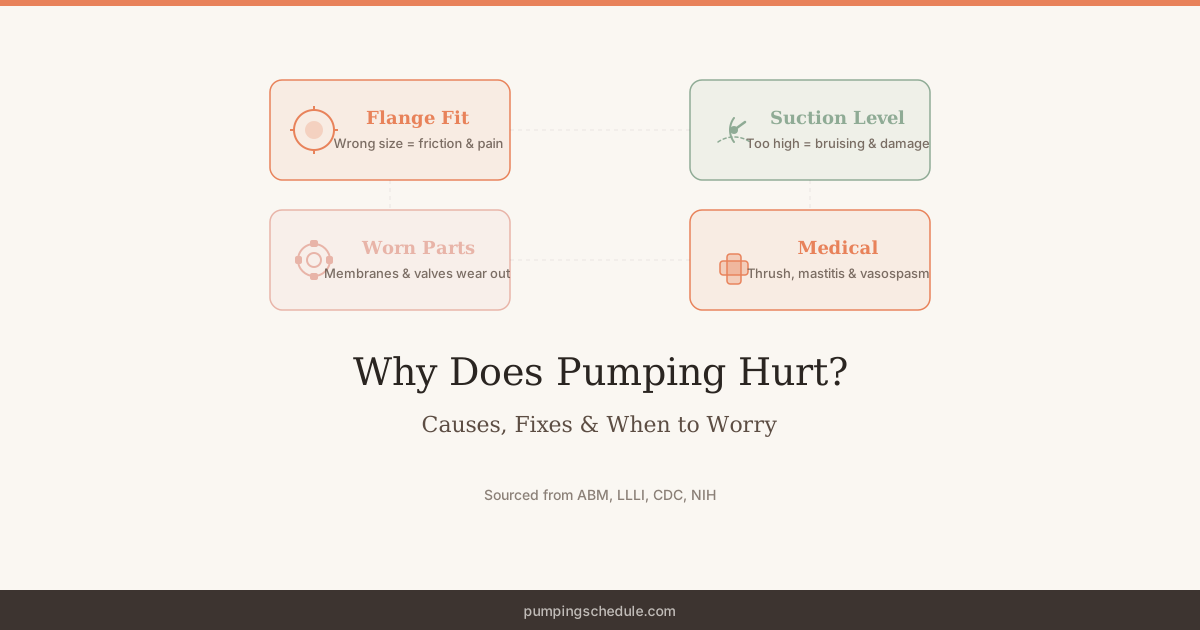
Does pumping hurt for you? Not just a little uncomfortable in the first few days — actually painful, every session, in a way that makes you dread sitting down with the pump?
You're almost certainly not stuck. The vast majority of breast pump pain traces back to something mechanical — flange size, suction settings, worn parts — that you can fix today without a lactation appointment. This page gives you a map: what your pain most likely means, what to try first, and when to stop troubleshooting and call someone.
Why Pumping Hurts: It's Almost Always Fixable
Pumping pain is not a rite of passage. It is information.
Research on nipple pain during lactation — including guidance from the Academy of Breastfeeding Medicine — consistently points to improper fit and technique as the primary drivers of pumping discomfort. Flange diameter, suction level, and session timing — not your anatomy — are responsible for most pump-related breast pump pain.
The three most common fixable causes, in order of frequency: signs your flange size is wrong, suction too high, parts that need replacing. Start there before assuming anything else.
The Most Common Cause: Your Flange Doesn't Fit
Flange fit is the single biggest driver of pumping pain. A wrong-size tunnel doesn't just hurt — it compresses tissue, reduces output, and can cause bruising that compounds with every session.
Correct fit looks like this: your nipple moves freely through the tunnel with roughly 2-3mm of clearance on each side. Little to no areola gets pulled in. The motion feels like rhythmic pressure, not friction or suction on skin. If the tunnel wall is touching your nipple shaft during the pull cycle, the flange is too small. If so much areola gets sucked in that the base of your breast aches, it's too large.
Measure your nipple diameter (not areola) with a soft measuring tape or ruler immediately after a feed or pump session. Add 1-3mm to that number — that is your starting flange size. (If you have flat nipples, sizing is trickier — a slightly smaller flange sometimes seals better.) Most moms end up between 21mm and 27mm, but sizing varies more than pump brands let on. Our flange size guide has brand-by-brand charts for Spectra, Medela, Elvie, Momcozy, and Willow — plus a section on elastic nipples that standard sizing misses.
Elastic nipples: a sizing problem that standard advice misses
Some nipples elongate dramatically under suction — far more than they measure at rest. The result: you measure correctly at 24mm, order 24mm flanges, and still feel rubbing because the nipple stretches to 28mm mid-session. Standard sizing charts don't capture this.
If you've sized up twice and still feel friction, an angled flange insert is often the fix — our elastic nipples pumping guide walks through insert options and sizing adjustments. Pumpin' Pals flanges are angled at 45 degrees instead of straight, which reduces the stretch distance and changes where pressure lands on the nipple shaft. As one exclusive pumper described it: “I tried every size Spectra sells and still felt like I was being pinched. Switched to angled flanges and my sessions went from something I dreaded to something I could just... do.” (Paraphrased from r/ExclusivelyPumping.) For the Spectra family specifically, the S1, S2, and Synergy Gold all accept third-party inserts without adapters — one of the easier pumps to customize for fit. Our best flange inserts roundup compares the top picks. If you're comparing pumps, our best breast pumps guide covers flange compatibility for every major model.
Suction Settings and Speed: The “Max Setting” Mistake
More suction does not mean more milk. It often means more pain and less output — nipple tissue under excessive force swells and partially blocks the ducts you're trying to empty.
The La Leche League International guidelines on pumping recommend using the highest suction level that remains comfortable — not the highest level available. Your “maximum comfortable” is probably several notches below your pump's maximum setting. That distinction is worth writing on the pump itself if you keep forgetting.
Most double electric pumps have two phases: stimulation (faster, lighter cycles to trigger letdown) and expression (slower, deeper cycles for milk removal). The Spectra S1 and S2 separate these into distinct Cycle and Vacuum controls, giving you fine-grained control over each phase. Start letdown stimulation at a higher cycle speed but lower vacuum. Once milk is flowing, drop to a slower cycle and bring vacuum only as high as feels comfortable.
If you're pumping at work and trying to fit sessions into tight windows, the instinct is to crank suction and finish faster. A comfortable mid-level setting empties more efficiently than a painful high one. Our pumping at work guide covers how to structure sessions without using suction as a shortcut.
Startup Soreness vs. Something Actually Wrong
Early pumping tenderness and real pain look different — and responding to the wrong one wastes time.
Normal startup soreness (first 10-14 days): Nipples that have never experienced mechanical suction take time to adjust. You may feel sensitivity at the start of each session, mild tenderness afterward, and general breast fullness between sessions. This typically improves noticeably by the end of the second week. The soreness is diffuse — uncomfortable, not sharp.
Pain that is not normal, at any stage:
- Sharp or stabbing pain during the pull cycle
- Burning that starts during or after suction releases
- Visible skin breakdown, cracking, or bleeding on the nipple
- Pain that gets worse over days instead of better
- New pain after weeks of comfortable pumping
- Pain only on one side with no change in technique
New pain after a pain-free stretch deserves particular attention. Your parts may have worn out even if you haven't changed anything else. Valves and membranes degrade with use, creating inconsistent suction that translates to an uneven pull — a tugging sensation that differs from a clean suction cycle. If your pumping frequency has been consistent and pain appeared without explanation, inspect your pump components before anything else.
The CDC guidelines on breast pumping note that proper use and maintenance of pump equipment are essential for safe and effective milk expression.
Pumping Pain Quick-Reference Guide
Match what you feel to the most likely cause — and the fastest fix. None of these replace a provider visit for serious symptoms, but most cases start here.
| Pain type | Likely cause | Quick fix |
|---|---|---|
| Pinching or pulling at nipple shaft | Flange too small | Size up; try Pumpin' Pals angled flange for elastic nipples |
| Burning friction inside the tunnel | Flange too large, or no lubrication | Apply coconut oil to nipple before each session; re-measure |
| Sharp pain at letdown | Vasospasm, suction too high, or painful letdown reflex | Drop vacuum to lowest effective level; warm compress post-session |
| Stabbing deep breast pain | Clogged duct or mastitis | Warm compress + massage before sessions; call provider if fever develops |
| White or color-change nipple after pumping | Vasospasm (possible Raynaud's) | Warm compress immediately post-session; discuss with OB or midwife |
| Pain only on one side | Flange misaligned, elastic nipple on that side, or one-sided infection | Re-center flange; measure both nipples separately; check for warmth or lump |
| Soreness after weeks of pain-free pumping | Worn valves or membranes reducing suction consistency | Replace valves and membranes; inspect backflow protector |
| Itching, shooting pain, or burning between sessions | Thrush (yeast infection) | Antifungal treatment; sanitize pump parts and bottles after every use |
Other Causes: Worn Parts, Dryness, and Positioning
Once you've ruled out flange fit and suction, three causes account for most remaining cases.
Worn valves and membranes
Silicone valves stretch with use. A worn duckbill valve that doesn't fully close between cycles creates an inconsistent suction pattern — the pull is uneven, which feels like a tugging that differs from a clean suction cycle. Exclusive pumpers should replace valves every 4 weeks; parts cost less than $10 and take 30 seconds to swap.
Nipple dryness and cracking
Mechanical suction removes moisture. In low-humidity environments especially, nipple skin dries and cracks — and each session then pulls against already-compromised tissue. A small amount of lanolin, coconut oil, or medical-grade nipple butter before each session creates a barrier without affecting milk. This matters even more when you're also managing engorgement, where the skin is already under tension.
Flange positioning during the session
Even a correctly sized flange causes breast pump pain if it shifts mid-session. Your nipple needs to stay centered — if the flange tilts, one side of the nipple shaft rubs the tunnel wall continuously. Check that your hands-free pumping bra holds the flange flush and level; if the bra stretches and the flange droops even slightly, centering is gone. For moms on an exclusive pumping schedule doing 6-8 sessions a day, small positioning errors compound quickly across dozens of daily sessions.
When Pain Signals a Medical Issue
Most pumping pain is mechanical. These four conditions are not — and they need more than a flange swap.
Vasospasm
Vasospasm is a sudden constriction of blood vessels in the nipple, usually triggered by the release of suction or by cold air. The nipple turns white, then blue or purple, then red — sometimes all in one session. The accompanying pain is burning or shooting, starting when suction releases and potentially lasting several minutes. Research published in the Journal of Human Lactation links Raynaud's phenomenon to nipple vasospasm in some breastfeeding mothers. Warm compresses applied immediately after each session help; if pain is severe, your OB can discuss medical options. For the full deep-dive on causes, treatment, and pumping adjustments, see our dedicated nipple vasospasm guide.
Mastitis
Mastitis is a breast infection — localized warmth, redness, and pain in one breast, paired with flu-like symptoms: fever, chills, body aches. It often starts as a clogged duct that doesn't resolve. The CDC recommends continuing to nurse or pump through mastitis to keep milk moving, but antibiotics are usually required — don't wait more than 24-48 hours with a fever before calling your provider.
Thrush and clogged ducts
Thrush (yeast overgrowth) announces itself differently than mechanical pain: itching, burning, or shooting pain betweensessions — not just during — plus shiny or flaky nipple skin and sometimes white patches in your baby's mouth. It requires antifungal medication for both of you, and sanitizing every pump part that touches milk after every session until treatment is complete.
A clogged duct feels like a firm, tender lump that may or may not reduce after pumping. Most resolve within 24-48 hours with warm compresses and gentle massage before sessions. Some moms find that a Haakaa filled with warm water and Epsom saltprovides gentle suction that helps loosen stubborn clogs. If it doesn't resolve — or you develop a fever — contact your provider.
Nipple damage
Visible cracking, bleeding, or open sores need an IBCLC or OB to assess before you continue pumping. If you notice pink or blood-streaked milk in your bottles, it's usually from nipple tissue damage — alarming to see, but rarely harmful to your baby. If you're reducing frequency during a healing period, do it slowly to protect supply — our guide on dropping a pumping session walks through the safest approach. For a full healing and prevention protocol, see our guide on nipple damage from pumping.
If that white dot on your nipple turns out to be a milk blister, we have a dedicated guide for treating it while you keep pumping.
Any of the above — especially with fever or worsening symptoms — warrants a call. Don't diagnose mastitis from a Reddit thread.
How to Pump Pain-Free from Session One
Prevention is easier than troubleshooting. If you're just starting out — or restarting after a break — run through this checklist before your first session.
- Measure before you buy. Default 24mm flanges fit fewer people than manufacturers imply. Measure first, buy second — and re-measure at 6 weeks and 3 months, since sizing can shift postpartum.
- Start suction low. Begin each session at the lowest setting and increase until milk flows, then stop. The setting that produces milk without hurting is your correct setting — not the next notch up. If even the lowest setting hurts, hand expression lets you remove milk pain-free while your nipples heal.
- Lubricate from day one. Coconut oil or lanolin on the nipple before each session reduces friction and prevents the dryness-and-cracking cycle before it starts.
- Center the flange every time. Thirty seconds of visual confirmation before starting suction prevents hours of lopsided soreness.
- Watch session length.Going beyond what your breasts need doesn't increase output — it increases irritation. Our guide on how long each session should last gives target durations by stage.
- Replace valves on schedule.Every 4-8 weeks. Don't wait for pain to tell you they're worn.
- Track how sessions feel, not just output.If you're on an exclusive pumping schedule, note comfort alongside volume. Changes in how a session feels are the earliest signal something needs adjusting — before output actually drops.
- Line up an IBCLC before you need one.Nipple pain that doesn't respond to fit and suction adjustments within a week deserves professional eyes. An IBCLC can assess flange fit in real time — something that's nearly impossible to diagnose from a photo.
If you're building out your full daily schedule, our how often to pump guide covers frequency recommendations by age and supply stage.
Last reviewed: July 2026 by the Pumping Schedule Editorial Team. Read our editorial standards.