Flange inserts are small silicone adapters that sit inside your existing breast shield, reducing the tunnel diameter so it matches your actual nipple size. A proper fit means less friction, less swelling, and — for many pumping parents — noticeably better output. The AAP's breastfeeding policy emphasizes that effective milk removal drives supply — and fit is where that starts.
Six popular options tested over four months, rotated across different pumps. Here's what held up, what slipped, and what's worth your money.
Why Flange Inserts Matter
Most breast pumps ship with 24mm or 28mm flanges. Most nipples measure between 15mm and 19mm. That gap means your areola gets dragged into the tunnel, you lose suction, and your sessions hurt.
A correctly sized flange allows your nipple to move freely inside the tunnel with 1-2mm of clearance on each side. Too large, and areolar tissue gets pulled in — causing pain, swelling, and incomplete drainage. Too small, and friction damages the nipple itself. The NIH's overview of nipple anatomy explains why tissue compression reduces milk flow.
Buying new flange sets costs $15-30 each, and most brands only offer sizes in 2-4mm increments. Silicone flange inserts solve this by letting you fine-tune fit without replacing the entire shield. They slip inside your existing flange, reduce the tunnel by 2-8mm, and cost a fraction of replacement parts.
Before you shop: grab a ruler or use the printable measuring tool in our flange size guide. You need your actual nipple diameter — measured after pumping, when tissue is slightly stretched — to pick the right insert size.
Our top picks
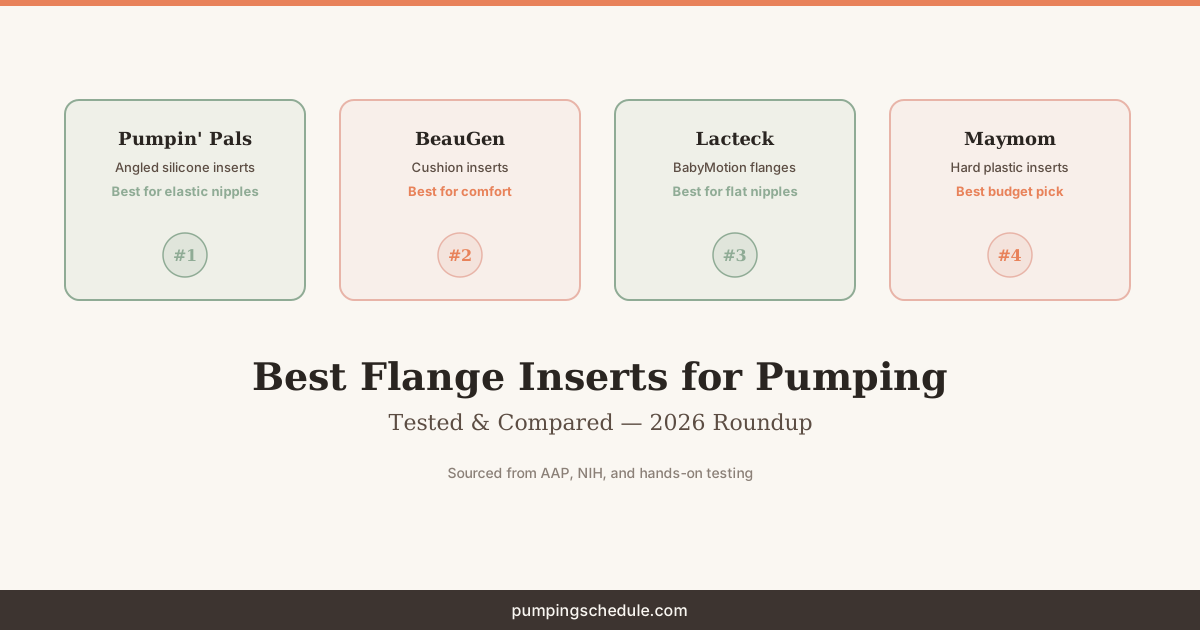
BeauGen Cushions
Best Overall · $13–$18
Pumpin' Pals
Best for Elastic Nipples · $30–$40
Legendairy Milk Silke
Best Size Range · $12–$16
Maymom Silicone Inserts
Best Budget · $7–$10
Based on real-world testing during exclusive pumping schedules. All picks independently tested.
Best Overall: BeauGen Cushions
BeauGen took a different approach from most inserts. Instead of rigid size reduction, these cushions are soft, squishy silicone pads that line the inside of your flange tunnel. They reduce diameter by roughly 2mm while adding cushioning that absorbs the repetitive suction cycle.
Who it's best for: Pumping parents with mild sizing issues (1-2mm reduction needed) combined with nipple soreness or friction. If your flanges are close to right but sessions still hurt, BeauGen is the first thing to try.
The downside:The ~2mm reduction is fixed. If you need to go from 24mm down to 17mm, BeauGen alone won't get you there. The thicker silicone can also reduce internal volume and slightly dampen suction on lower-powered pumps.
What we like
- Cushioning reduces friction and soreness significantly
- Easy to clean — no tiny crevices or complicated shapes
- Fits most standard flange brands (Spectra, Medela, Lansinoh)
What could be better
- Only ~2mm reduction — not enough for significantly oversized flanges
- Can dampen suction on weaker pumps
- Needs replacement every 2-3 months as silicone compresses
Best for Elastic Nipples: Pumpin' Pals
Pumpin' Pals aren't technically inserts — they're full replacement flanges with an angled, spoon-shaped design that follows the natural drape of breast tissue. But they end up on every flange insert list because they solve the same core problem: standard round tunnels don't work for everyone.
Who it's best for: If you have elastic nipples— where tissue stretches dramatically during pumping, filling the entire tunnel regardless of size — Pumpin' Pals change the geometry entirely. The angled shape prevents your nipple from fighting gravity and suction in a straight tube. “These are the ones that finally worked after cycling through four standard brands.” — paraphrased from an EP community discussion.
The downside:Compatibility is limited. They work with Spectra and Medela but don't fit every pump, and they won't work with wearables. They're also the priciest option here, and there's a learning curve — first few sessions feel awkward until you figure out positioning.
What we like
- Angled design genuinely helps elastic nipples
- Reduces nipple swelling and elastic pull during sessions
- Multiple size options for different anatomies
What could be better
- Not universal — check pump compatibility first
- Most expensive option on this list
- Takes 2-3 sessions to get positioning right
Best Size Range: Legendairy Milk Silke
Legendairy Milk's Silke inserts are smooth, food-grade silicone that come in sizes from 13mm up to 21mm — one of the widest ranges available. The silicone is noticeably thinner and slicker than competitors, so they slide into flanges easily and don't bulk up the tunnel.
Who it's best for: Anyone who needs a specific, precise size reduction. If you measured at 15mm but your pump came with 24mm flanges, Legendairy Milk actually makes a 15mm insert. Also good for the first three months postpartum when nipple size tends to change — you can buy individual sizes without committing to a full set.
The downside: Thin silicone wears faster. Heavy users (6-8 sessions daily) report edges curling after 6-8 weeks. The fit inside Medela PersonalFit Flex shields can also be tight enough to make removal frustrating.
What we like
- 13-21mm range covers nearly every nipple size
- Thin silicone doesn't reduce suction like thicker inserts
- Individual sizes available — no forced bundles
What could be better
- Thinner material wears faster under heavy daily use
- Tricky to remove from some Medela flange models
- Sizing runs slightly small — consider ordering one size up
Best Budget: Maymom Silicone Inserts
Maymom has made aftermarket pump parts for years, and their inserts reflect that — functional, no-frills, priced at roughly half of Legendairy Milk or Idaho Jones. Basic size-reduction inserts in food-grade silicone, available 15-21mm.
Who it's best for:First-time insert buyers who want to test whether sizing down helps before spending more. Also smart if you're buying multiples — one set for home, one for work, one for backup. At this price, redundancy is cheap.
The downside: Firmer, less polished silicone. Some users find edges slightly rough out of the box (a rinse and rub smooths them). Size range tops out at 15mm on the small end, so anyone measuring below 15mm needs to look elsewhere. If you have flat nipples, the rigid walls don't offer the gentle coaxing that softer silicone provides.
What we like
- Significantly cheaper than premium inserts
- Firmer silicone holds shape longer — more durable
- Fits most Spectra and Medela flanges
What could be better
- Edges can feel rough initially — needs a break-in rinse
- No sizes below 15mm
- Firmer feel less comfortable for sensitive or damaged nipples
Full Comparison
| Feature | BeauGenBest Overall | Pumpin' Pals | Legendairy Milk | Maymom |
|---|---|---|---|---|
| Type | Cushion pad | Replacement flange | Insert | Insert |
| Material | Soft silicone | Medical-grade silicone | Food-grade silicone | Food-grade silicone |
| Size range | ~2mm reduction | Multiple angles | 13-21mm | 15-21mm |
| Wearable compatible | Limited | No | Yes | Limited |
| Durability | 2-3 months | 6+ months | 6-8 weeks (heavy use) | 4+ months |
| Price | $13-18 | $30-40 | $12-16 | $7-10 |
| Standout feature | Cushioning comfort | Elastic nipple design | Thinnest silicone | Price |
How to Choose the Right Insert
- Measure your nipple. Use the printable ruler in our flange size guide after a pump session — your pumping diameter is what matters, not your resting size.
- Check your current flange. Your insert fits inside it. A 24mm Spectra flange plus a 17mm insert works if your nipple measures 15-16mm. Mismatched combos are the #1 return reason.
- Match the problem to the product.Pain + mild sizing issue → BeauGen. Elastic nipples → Pumpin' Pals. Precise uncommon size → Legendairy Milk. Budget test → Maymom. Wearable pump → LactationHub Clear Comfort.
- Buy one size, test for a full day.Don't order a 5-pack upfront. Get your measured size, pump 4-5 sessions, and evaluate. Signs it's working: less redness post-pump, no areolar creasing, nipple moves freely in the tunnel.
- Reassess at 6-8 weeks. Nipple size shifts — especially in early months or after a supply regulation change. Check our guide on when to replace pump parts for the full maintenance schedule.
Related Reading
- Flange Size Calculator — find your size before ordering inserts
- The Complete Flange Size Guide — measure correctly the first time
- Elastic Nipples and Pumping — when standard inserts aren't enough
- When to Replace Pump Parts — including inserts
- Breast Pump Reviews — find the right pump before fine-tuning flanges
- Signs of Wrong Flange Size — Diagnose Before You Buy