Here's the good news: flat nipples don't mean you can't pump effectively. About 10-20% of women have at least one flat or inverted nipple, per the NIH's clinical overview of inverted nipples, and plenty of them pump full supplies every day. The trick is understanding how your anatomy interacts with your equipment — and making a few targeted adjustments.
No generic latch advice here. This is pump-specific strategy for flat and inverted nipples.
What Flat Nipples Actually Look Like
A flat nipple sits level with the areola instead of protruding outward. When you're not cold or stimulated, it blends into the surrounding breast tissue — almost flush with the skin.
The quick test: place your thumb and index finger at the base of your nipple (on the areola edge) and gently compress. A protruding nipple pops outward. A flat nipple stays level or barely budges. An inverted nipple pulls inward.
Flat nipples are completely normal. The underlying anatomy — shorter milk ducts, tighter connective tissue, or less developed smooth muscle in the nipple — just means yours doesn't protrude the way textbook diagrams suggest. Plenty of women don't realize they have flat nipples until they try to pump for the first time.
One thing worth knowing: flat nipples can change. Pregnancy hormones sometimes cause nipples to protrude more. Pumping itself gradually draws them out over weeks. What looks flat when you're relaxed might protrude just fine under suction.
Flat vs. Inverted: What's the Difference
People use “flat” and “inverted” interchangeably, but they're different anatomically — and the distinction matters for pumping.
Flat nipplessit flush with the areola. They don't protrude, but they don't retract inward either. Most respond to stimulation or suction by protruding at least partially.
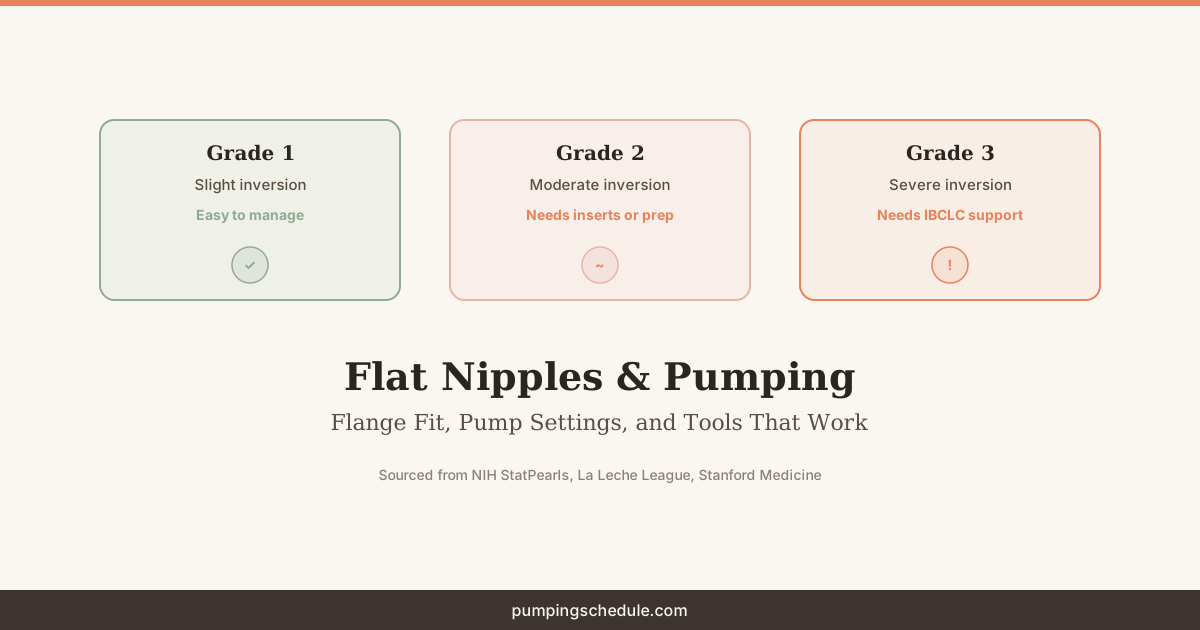
Inverted nipples actively pull inward, below the areola surface. La Leche League classifies them in three grades:
| Grade | What it looks like | Response to suction | Pumping impact |
|---|---|---|---|
| Grade 1 | Slight inversion | Easily pulls out; stays out temporarily | Minimal — most pumps handle this fine |
| Grade 2 | Moderate inversion | Can be pulled out but retracts quickly | May need inserts or pre-pump prep |
| Grade 3 | Severe, fixed inversion | Doesn't respond to stimulation | Needs professional support + specialized tools |
A Grade 1 inverted nipple and a flat nipple are handled almost identically. Standard pump suction usually draws them out. Grade 2 and 3 need more intervention — different flange setups, manual eversion before pumping, sometimes a nipple shield.
It's common to have one flat and one protruding nipple, or different grades on each side. Check both.
How Flat Nipples Affect Pumping
Breast pumps work by sealing around your nipple and areola, then using rhythmic suction to draw the nipple into the flange tunnel. Flat nipples create problems at every step — but not the ones you'd expect.
The seal issue.A protruding nipple naturally centers itself in the flange opening. With flat nipples, the flange can slip or tilt because there's no anchor point. Air leaks kill suction before it does anything useful.
The draw issue.A flat nipple has to travel farther to reach the flange tunnel. Your pump works harder to evert the nipple before it can start the actual milk-extraction cycle. On low suction, this might not happen at all — you'll see areola getting pulled in while the nipple stays put.
The friction issue. When a flat nipple gets drawn into the tunnel, it rubs against the sides differently than a protruding one. This can cause pumping painthat has nothing to do with flange size — it's about how tissue moves during each suction cycle.
All of this leads to incomplete drainage, which means less milk per session. Over time, poor drainage signals your body to produce less.
The part most guides skip: pump suction can actually help draw out flat nipples over time. Repeated gentle stretching loosens the tight connective tissue bands. Many EP moms report that after 4-6 weeks of consistent pumping, initial seal problems resolved on their own. “By month two, my Spectra was pulling my nipples out like they'd never been flat. I wish someone had told me to just keep going.” — paraphrased from an EP community discussion.
Flange Sizing for Flat Nipples
Standard advice says measure your nipple diameter and add 2mm. That works for protruding nipples. For flat nipples, it's unreliable.
The problem is measurement itself. When your nipple doesn't protrude, where do you measure? The base diameter of a flat nipple is often wider and less defined. And the nipple changes shape once suction pulls it out — it might elongate and narrow, or stay wide and shallow.
What to do instead:
- Measure your nipple at the base as best you can — imprecise is fine, you need a starting point.
- Try the standard size AND one size down. A slightly smaller opening sometimes creates better suction because less air leaks around the nipple.
- Watch what happens during pumping, not before. The right flange is the one where your nipple moves freely without the areola getting sucked in excessively.
- Check both sides separately. One flat, one protruding? You may need different sizes.
- Re-measure after 3-4 weeks. As pumping draws your nipples out, your correct size may change.
For the full measuring process, see our flange size guide. If standard sizes aren't working, silicone inserts (covered below) are often the real solution.
Also worth ruling out: elastic nipples can mimic a flange problem but have a completely different cause. If your areola gets pulled deep into the tunnel regardless of size, elasticity is the issue, not flatness.
Pump Settings and Technique
Getting settings right matters more with flat nipples than protruding ones. Wrong approach means fighting your anatomy instead of working with it.
Stay in stimulation mode longer. Most pumps have a fast, light-suction letdown mode. Spend an extra 1-2 minutes there before switching to expression. Quick cycling helps draw out the nipple gradually, giving the flange something to grip before heavier suction kicks in.
Increase suction slowly.Cranking to max when nothing seems to happen is tempting. Don't. High suction on an uneverted nipple just pulls areola tissue into the tunnel — it hurts and blocks milk flow. One notch at a time, 30 seconds between increases.
Hand express first. Two to three minutes of hand expression before attaching the pump can evert a flat nipple enough to get a seal. Bonus: it triggers letdown, so the pump has less work to do.
Reverse Pressure Softening before every session. Press all five fingertips around the base of your nipple and apply steady, gentle pressure inward toward your chest for 1-2 minutes. This pushes fluid away from the nipple area, softens the areola, and often causes the nipple to protrude enough for a good seal. La Leche League documents this technique for engorgement, but it works just as well for flat nipples.
Consider your pump type.Hospital-grade pumps (Medela Symphony, Spectra S1) have stronger, more adjustable suction that draws out flat nipples better than lower-powered portable models. If you're choosing your first pump, factor this in — our best breast pumps guide compares suction strength across models.
Tools That Help
Sometimes technique alone isn't enough. These tools bridge the gap between flat nipple anatomy and pump design.
Nipple shields. A thin silicone shield placed over the areola creates an artificial protrusion for the flange to seal around. Works especially well for Grade 2 inverted nipples — the shield gives suction a handle to grab. La Leche League recommends working with a lactation consultant if you use shields long-term. They're a bridge tool, not permanent.
Silicone flange inserts.These fit inside your existing flange to reduce the tunnel diameter. For flat nipples, they do two things: create a snugger fit that improves the seal, and cushion friction that causes soreness. BeauGen and Pumpin' Pals make inserts designed for non-standard nipple shapes — see our best flange inserts comparison for a full breakdown.
Nipple evertors (Supple Cups, Niplette). Small suction devices worn in your bra for 15-30 minutes before pumping. Gentle sustained suction draws flat nipples out. The only tool that addresses root anatomy rather than working around it. Some moms use them for several weeks and find their nipples begin protruding on their own.
Warming pads. Heat increases blood flow and tissue pliability. A warm compress for 2-3 minutes before pumping makes flat nipples slightly more responsive to suction. Simple, free, underrated.
One note on all these tools: parts wear out. Silicone inserts lose shape, shields thin out, flanges develop micro-cracks that break suction. If something that worked suddenly stops working, check equipment age — see our guide on when to replace pump parts.
When to See an IBCLC
Most flat nipple pumping challenges are solvable with the strategies above. But some situations need professional eyes.
See a lactation consultant (IBCLC) if:
- You have Grade 3 inverted nipples and can't get any suction seal
- You've tried multiple flange sizes, inserts, and shields with no improvement
- You're experiencing consistent pain despite correct fit — this could indicate nipple vasospasm or another underlying issue
- Supply is dropping and you suspect incomplete drainage is the cause
An IBCLC can watch you pump in real time and see exactly what's happening inside the flange. They often spot fit and technique issues in minutes that you'd troubleshoot for weeks on your own.
If supply concerns are part of the picture, our guide on increasing milk supply while pumping covers the full strategy — but correcting pump setup is always step one.
Related Reading
- Flange Size Guide — How to Measure and Find Your Fit
- Elastic Nipples and Pumping
- Pumping Pain: Causes and Solutions
- Best Breast Pumps
- Nipple Damage From Pumping — friction from flat nipples can cause cracking and skin breakdown
- Signs of Wrong Flange Size