You are mid-session, half-watching a show on your phone, when you notice the pump sounds wrong. Wheezier. The bottle that normally hits 4 ounces is sitting at 2.5. Your mind goes straight to supply — but hold on. Before you start googling power pumping protocols, flip your duckbill valve over. If it looks like a deflated balloon instead of a crisp duck mouth, you just found your problem.
Knowing when to replace pump parts saves you from chasing phantom supply drops. This guide covers every replaceable component — valves, membranes, flanges, tubing, backflow protectors — with brand-specific notes for Spectra, Medela, Elvie, and Willow. Whether you use a traditional double electric or a wearable pump, the timelines differ, and getting them wrong costs you milk.
Why Pump Parts Wear Out — and Why It Matters for Output
Every cycle stretches silicone, flexes plastic, and pushes air through narrow channels. A mom pumping 6 times a day at 120 cycles per minute runs roughly 43,000 suction cycles per day through her valves. Over 4 weeks, that is 1.2 million flexes on a piece of silicone thinner than a credit card. (Your duckbill valve has endured more reps than any CrossFit athlete — it has earned retirement.)
When parts degrade, suction becomes inconsistent. Your pump motor is fine — still generating the same pressure. But the valve that should snap shut between cycles now leaks air, or the flange that once sealed flush against your skin has a micro-gap. The result looks like a supply drop. It is actually a hardware problem. The FDA recommends inspecting breast pump parts regularly and replacing any component that shows visible wear.
The fix is cheap. A set of replacement valves runs $5-8. A new membrane is under $3. Knowing when to swap — before output drops, not after — is what separates proactive breast pump maintenance from chasing a ghost.
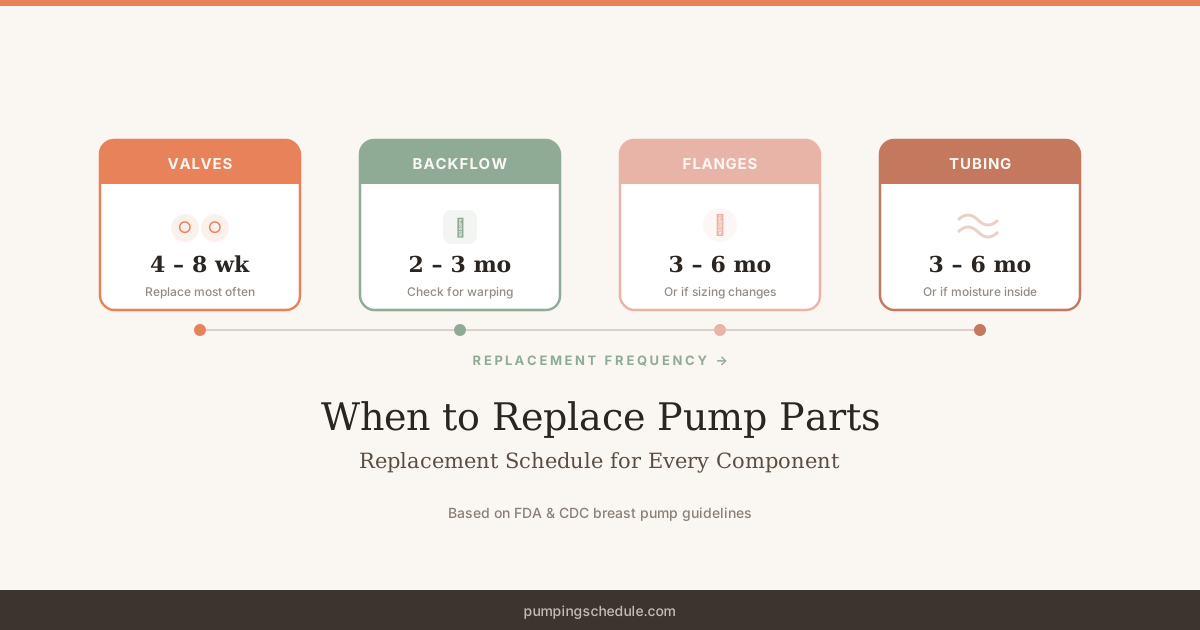
Valves and Membranes: Replace Every 4-8 Weeks
Valves and membranes are the hardest-working parts in your setup. They open and close with every suction cycle, creating the pressure differential that draws milk out. When they fail, suction flatlines.
Spectra duckbill valves
Spectra pumps (S1, S2, S9, Synergy Gold) use one-piece duckbill valves made of soft silicone — the most common failure point on any Spectra setup. For exclusive pumpers, replace them every 4 weeks. Not because they visibly break at week 4, but because the silicone stretches enough to reduce seal pressure. Casual pumpers (1-2 sessions a day) can stretch to 6-8 weeks.
Quick test: pinch the duckbill closed and release. It should snap back immediately. If it stays open or returns slowly, it is done. As one EP mom on Reddit put it: “I spent a week panicking about my supply before my husband pointed out my duckbill looked like a sad flower.” (Paraphrased from r/ExclusivelyPumping.)
Medela membranes
Medela pumps (Pump In Style, Freestyle Flex, Symphony) use a two-piece system: a yellow valve with a thin white membrane on top. That membrane is the weak link. It is so thin that a fingernail can nick it during assembly — and a nick you cannot see can still break suction. Check your Medela membranes weekly by holding them up to light. Look for thinning, tears, or warping. Replace every 4-8 weeks, leaning toward every 4 if you pump more than 4 times daily.
Wearable pump valves
Hands-free wearable pumps like Elvie Stride, Willow Go, and Pumpables Genie Advanced use proprietary valve assemblies. You cannot substitute generic parts — fit tolerances are too tight and aftermarket versions risk breaking the seal entirely. Order replacements from the manufacturer. Elvie recommends checking valves after every 100 hours of use; Willow suggests monthly inspection regardless of frequency.
No valve gives you a warning light. You find out it is failing when output drops or the pump sounds louder than usual. Set a calendar reminder. Replace proactively.
Breast Shields and Flanges: Replace Every 3-6 Months
Flanges (also called breast shields) are the hard plastic funnels that sit against your breast. They take less mechanical stress than valves but still degrade — especially along the rim where they seal against skin. Micro-cracks form, edges roughen, and the seal weakens just enough to leak air without being visible.
For exclusive pumpers, replace breast pump parts like flanges every 3 months. Moms pumping 1-3 times daily can go 6 months. Between replacements, inspect the tunnel and rim after each wash — yellowing or cloudiness usually means the plastic is breaking down.
Sizing matters here, too. A wrong-size flange accelerates wear on both the plastic and your skin. Medela flanges come in 21mm, 24mm, 27mm, and 30mm. Spectra offers 20mm, 24mm, and 28mm as standard. Your size can change postpartum — it often does around the 6-week and 12-week marks. A poor fit costs you comfort, output, and flange lifespan. Our breast pump reviews include flange size details for every model we cover.
Tubing: Replace Every 3-6 Months
Tubing carries the air pressure that drives suction. It should never have moisture inside it during normal operation. Condensation droplets, milk residue, or discoloration inside the tube? Replace immediately — mold can colonize tubing within 48 hours in a humid environment.
Standard timeline for knowing when to replace pump parts like tubing: every 3 months for EP moms, every 6 for occasional pumpers. Check yours after each session by holding it up to light. Spectra tubing is thicker-walled and tends to outlast Medela's thinner version, but both develop the same issues: moisture ingress, lost elasticity at connections, and pinhole leaks.
Quick test: disconnect the tubing and blow through it. No resistance, no air escaping from the sides. If the tube feels stiff, sticky, or has kinks that will not straighten, swap it. If you pump at work, keep a spare set in your bag. A cracked tube at the office with no backup is a crisis nobody needs. (Ask the EP moms who have lived it — there is nothing quite like the office supply closet MacGyver moment.)
Closed-system pumps (Spectra, most wearables) rarely get moisture in tubing because a backflow protector blocks milk from reaching the line. Open-system pumps (older Medela models) lack that barrier, so tubing contamination is more common.
Backflow Protectors: Replace Every 2-3 Months
Backflow protectors sit between the collection bottle and the tubing, preventing milk and moisture from traveling into the pump motor. They are standard on closed-system pumps like the Spectra S1 and S2. If yours fails, milk vapor reaches the motor — and once moisture is inside the motor housing, suction degrades permanently.
Replace every 2-3 months, or sooner if you see condensation in your tubing (which should be impossible if the backflow protector is working). Spectra backflow protectors have a small silicone membrane inside — test it the same way you test a duckbill valve. Maymom and Nenesupply make compatible replacements, but some moms report slightly different fit. When in doubt, go OEM.
The CDC breast pump hygiene guidelines emphasize cleaning all parts that contact milk or milk vapor after every use — backflow protectors included. Skipping them during your wash routine accelerates membrane breakdown and risks mold in the one spot you really do not want it.
Master Replacement Schedule
Here is the complete pump parts replacement schedule. Screenshot it, tape it to your pump bag — whatever gets it in front of you when you need it.
| Part | Replace Every | EP Moms | Signs of Wear |
|---|---|---|---|
| Valves / membranes | 4-8 weeks | Every 4 weeks | Stretched, torn, won't lie flat |
| Breast shields / flanges | 3-6 months | Every 3 months | Discoloration, cracks, poor seal |
| Tubing | 3-6 months | Every 3 months | Moisture inside, discoloration, holes |
| Backflow protectors | 2-3 months | Every 2 months | Condensation in motor, weak suction |
| Duck bills (Spectra) | 4-6 weeks | Every 3-4 weeks | Won't snap closed, visible stretch |
Two things this table does not capture: if you pump longer sessions (30+ minutes), parts wear faster than the timelines above. And if you use a wearable pump, cut every timeline by about 25% — the smaller form factor puts more stress on each component.
Signs Your Parts Need Replacing Now
Sometimes parts fail ahead of schedule. Do not wait for your calendar reminder if you notice any of these:
- Output dropped with no other explanation.You are hydrated, sleeping (relatively), eating enough, baby's demand has not changed — but per-session volume is down 15-20%. Swap valves first. It is the cheapest diagnostic step you can take.
- Your pump sounds different. Louder, wheezier, or with a rhythmic clicking it never had before. Air is leaking and the motor is compensating.
- Suction feels weaker at the same setting. You used to pump at level 5; now level 7 feels like your old 5.
- Visible damage. Cracks, tears, cloudiness, warping. If a valve will not lie flat on a table, it is done.
- Moisture in the tubing. On a closed-system pump, your backflow protector has failed. On an open-system pump, milk has entered the line — replace the tube and clean the motor housing.
- Film you cannot wash off. If a part stays hazy after thorough cleaning, the material is porous enough to harbor bacteria. The La Leche League pump maintenance guidance recommends replacing any part that cannot be fully cleaned.
- Smell. Silicone and plastic should smell like nothing after washing. A sour or milky odor that survives sanitizing means bacteria have colonized the surface.
Worn flanges in particular cause more than suction loss — a cracked or degraded flange rim can create friction and nipple compression that gets attributed to other causes. Worn flanges can also contribute to nipple blebs and nipple vasospasm — another reason to swap parts on schedule. If parts replacement does not resolve the discomfort, our guide on pumping pain caused by worn parts walks through flange fit, suction settings, and the full checklist for identifying what is actually hurting you.
A rule of thumb from the EP trenches: if you are troubleshooting a supply drop and have not replaced your valves in the last month, do that before changing anything else. Another Reddit mom put it well: “I tried fenugreek, oatmeal, and Gatorade before my LC told me to just buy new duckbills. Two-dollar fix.” (Paraphrased from r/breastfeeding.) The FDA consumer tip sheet on breast pumps backs this up: worn or damaged parts reduce pump effectiveness and create hygiene risks. Nine times out of ten, fresh parts fix what looks like a supply problem.
Related Reading
- How Long to Pump — session length affects part wear; make sure your duration is dialed in
- Exclusive Pumping Schedule — full daily schedules by month, from newborn through 12 months
- How to Increase Milk Supply While Pumping — rule out parts issues first, then use these strategies
- Best Breast Pumps — our top picks with part availability and replacement cost notes
Last reviewed: June 2026