5:45 AM. Your baby is screaming. You grab a bag from the freezer and it is a solid brick. You hold it under the faucet, toggle between hot and cold three times, wonder if you just ruined $8 worth of liquid gold, and start Googling “how to thaw frozen breast milk” with one thumb while bouncing a furious infant on your hip.
You are not the first person to panic-thaw at dawn. But the method you pick matters — the wrong heat source destroys the antibodies and fat you spent hours pumping. Below: a side-by-side of all three safe ways to thaw frozen breast milk, the one method that is never okay, what happens after thawing, and how to handle the lipase surprise that makes half your freezer stash smell like dish soap.
Everything here follows current CDC breast milk handling recommendations and La Leche League storage guidelines. For storage times before freezing, see our breast milk storage guide.
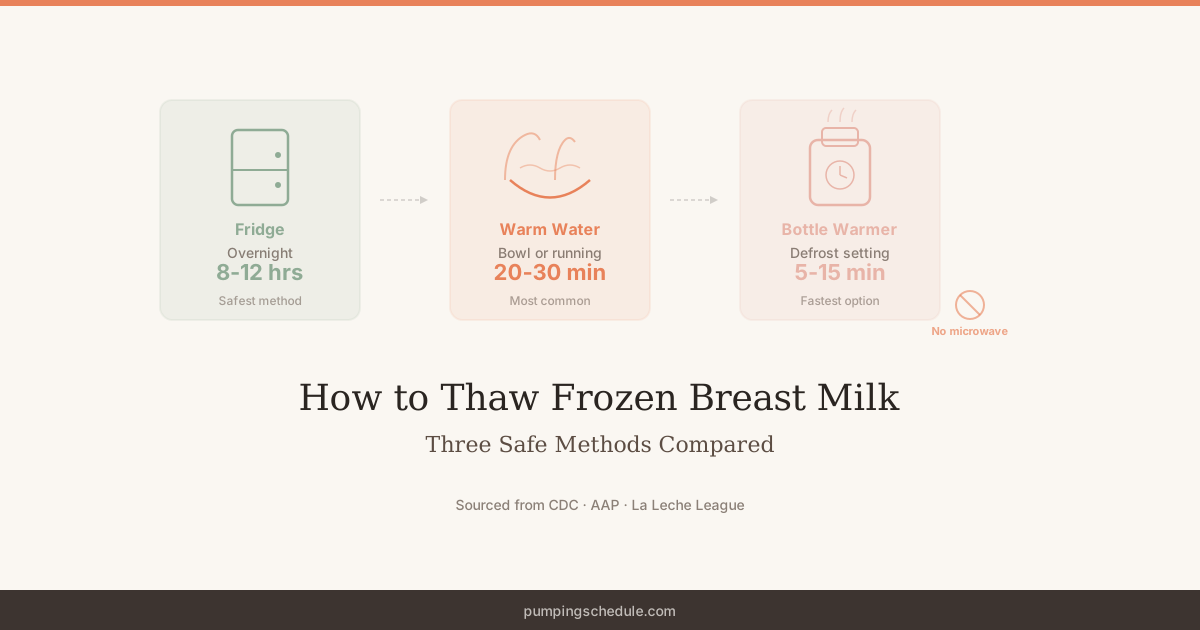
Three Ways to Thaw Frozen Breast Milk
Every safe method avoids direct heat. The only real difference is how much patience you have at feeding time.
| Method | Time | Pros | Cons | Best For |
|---|---|---|---|---|
| Fridge overnight | 8-12 hours | Safest, hands-off, preserves nutrients best | Requires planning ahead | Predictable daily routines |
| Warm water bath | 20-30 min | No special equipment needed | Water cools; may need to swap | Mid-day feeds, most EP moms |
| Bottle warmer | 5-15 min | Fastest, consistent temperature | Costs $25-60, varies by brand | Night feeds, impatient babies |
All three are endorsed by the CDC. In practice, most exclusive pumpers rotate between two methods depending on whether they remembered to move a bag before bed. (No judgment. That is a lot of bags.)
Overnight Fridge Method
Move a bag from freezer to fridge before bed. By morning, it will be thawed or nearly there. Temperature stays below 40°F (4°C) the whole time — no babysitting required, which makes this the gentlest way to defrost breast milk.
- Pull tomorrow's first feed from the freezer. Oldest bag first — first in, first out.
- Set it on a plate or in a bowl. Thawing bags drip, and nobody needs a milk puddle on the produce shelf at 6 AM.
- Wait 8 to 12 hours. A 3-to-5-ounce bag thaws fully overnight; larger portions (6 oz+) may need closer to 12.
- Once thawed, the milk is good for 24 hours in the fridge. Clock starts when the last ice crystal disappears.
This method pairs well with an exclusive pumping schedule because you already know roughly how many ounces tomorrow requires. Pull two or three bags if your baby goes through more than one feeding before your next pump session.
Warm Water Bath Method
The warm water bath is how you thaw frozen breast milk when you forgot to move a bag last night. (It happens. Frequently.) Fill a bowl or large mug with warm water — comfortable to the touch, not hot enough to flinch — and drop the sealed bag in.
- Warm, not hot.Roughly 99°F to 104°F (37°C to 40°C). If it stings your wrist, it is too hot for the milk.
- Swap the water if it cools before the bag thaws. Sitting in lukewarm water is just procrastination with extra steps.
- Running water is faster. Holding the bag under a warm tap cuts thawing time roughly in half because the constant flow transfers heat more efficiently. The CDC lists both methods as safe.
- Never use boiling water. It destroys heat-sensitive antibodies and can warp storage bags.
A 3-ounce bag takes about 20 to 30 minutes in a standing bowl. Once thawed, warm to body temperature or feed cold — some babies genuinely prefer fridge-temperature bottles.
Bottle Warmer Method
If you want to defrost breast milk fast, a bottle warmer with a frozen-milk setting is the move. The Dr. Brown's Deluxe handles frozen bags in about 5 to 10 minutes depending on volume — fast enough for a middle-of-the-night feed when your patience is roughly the same size as the bag.
Not every warmer can handle a solid frozen brick, though. Some are designed only for refrigerated bottles and overheat on frozen portions. The Kiinde Kozii uses a low-temperature water bath specifically meant to preserve nutrients while thawing — a solid pick if you pull from your stash daily. The Medela Quick Clean Micro-Steam bags are a separate product, but Medela's own bottle warmer also supports a defrost mode and fits their storage bags without adapters.
- Place the frozen bag or bottle in the warmer per the manufacturer's instructions.
- Select the defrost or frozen setting.
- Remove the milk as soon as the cycle ends — leaving it in a warming chamber pushes the temperature too high.
- Swirl gently, test on your wrist, feed.
If you are pumping at work and sending frozen bags to daycare, ask your provider which thawing method they use. Some daycares will not thaw frozen bags on-site. In that case, thaw at home overnight and send it cold.
Why You Should Never Microwave Breast Milk
Non-negotiable. Do not microwave breast milk — frozen or refrigerated.
Microwaves heat unevenly. The outside of the bottle feels lukewarm while a pocket inside is hot enough to burn your baby's mouth. You cannot swirl away a hot spot reliably. Beyond the scald risk, microwaving degrades the immune proteins that make breast milk worth the effort of pumping in the first place. La Leche League notes that both boiling and microwaving cause “loss of nutritional properties of the milk.” Those antibodies you pumped at 4 AM did not sign up to be nuked.
If someone tells you to “just zap it for 20 seconds,” smile, nod, and reach for a bowl of warm water.
What to Do After Thawing
Thawed breast milk looks weird. The fat separates, floats to the top, and the liquid underneath looks thin — sometimes blueish, sometimes grayish-yellow. Totally normal. Watery-looking milk after thawing does not mean anything went wrong, and our breast milk color guide covers every shade you might see in the bottle.
- Swirl, do not shake.Gentle swirling mixes the fat back in. Vigorous shaking is not dangerous, but swirling preserves more of the milk's protein structure.
- Warm if your baby prefers it.Place the thawed bottle in warm water until it reaches body temperature (98.6°F / 37°C). Test on the inside of your wrist — it should feel neutral.
- Or feed it cold. No medical reason thawed milk must be warmed. Some babies drink it straight from the fridge. One less step at 3 AM is always worth testing.
Unfinished warmed bottle? You can offer the rest at the next feeding — once. After that second attempt, toss whatever remains. The AAP recommends using warmed thawed breast milk within 2 hours to limit bacterial growth.
How Long Is Thawed Breast Milk Good For?
Twenty-four hours in the fridge from the moment it fully thaws. That is your entire window once you defrost breast milk — and the clock is ruthless.
The CDC specifies 24 hours from the point the milk is completely thawed — not from when you moved it to the fridge. A bag that takes 10 hours to thaw overnight gives you until the following evening, not the next morning.
Once warmed to room or body temp, use within 2 hours. Do not re-chill a warmed bottle. Do not refreeze thawed milk under any circumstances — refreezing degrades the antibodies and fat structure that make breast milk irreplaceable. The Office on Women's Health echoes these same timelines.
Knowing how to thaw frozen breast milk efficiently — and how many ounces your baby actually eats — lets you plan around tomorrow's pumping schedule and pull only what you need. Our breast milk storage guide covers room temp, fridge, and freezer durations if you want the full breakdown.
Lipase and Soapy-Smelling Thawed Milk
You thaw a bag, take a sniff, and it smells like dish soap. Your stomach drops.
That milk is probably fine.
Lipase is an enzyme naturally present in breast milk that breaks down fats. About one in five mothers produce enough of it that their thawed milk develops a soapy or metallic smell. The enzyme keeps working during the slow freeze-thaw process, but the milk remains safe. La Leche League confirms that lipase-affected milk is not spoiled. KellyMom's lipase guide covers the full spectrum of what high-lipase milk looks, smells, and tastes like.
“I threw out two full weeks of freezer stash before someone on Reddit told me it was lipase. I still think about those bags.” (paraphrased from r/ExclusivelyPumping, 2025)
“My baby drank the soapy-smelling milk without a second thought. I was the only one who cared.” (paraphrased from r/breastfeeding, 2024)
Soapy smell = lipase. Sour or rancid smell = spoilage. If you are unsure, taste a tiny drop. Lipase milk tastes slightly off but not foul. Spoiled milk tastes sour in a way your tongue will not let you miss.
To prevent lipase changes in future bags:
- Scald fresh milk before freezing.Heat to about 180°F (82°C) — small bubbles at the edges, not a full boil. Cool quickly in ice water, then freeze.
- Test one bag first. Freeze a small amount for 5 to 7 days, thaw, and smell. If it smells fine, your lipase levels are not high enough to worry about.
- Mix with fresh milk. A 50/50 blend often solves the taste issue if your baby rejects straight high-lipase thawed milk.
Scalding does reduce some immune properties, so only bother if your baby actually refuses the thawed breast milk. Many babies drink high-lipase milk without blinking. Not all bottle refusal is a lipase problem — if your baby fusses during bottle-feeding regardless of whether the milk is fresh or thawed, the cause is more likely flow rate, gas, or positioning.
Signs Thawed Breast Milk Has Gone Bad
Your nose knows. Truly spoiled breast milk smells distinctly sour or rancid — not subtly off, but unmistakably bad. Here is a scenario that plays out in kitchens daily: you thaw frozen breast milk, open the bag, catch a whiff, and freeze (figuratively this time). Before you pour it out, check which category it falls into.
Actual spoilage:
- Sour smellthat persists after swirling — sharper than the soapy lipase smell.
- Chunks that will not re-incorporate. Normal thawed milk separates but swirls back together. Spoiled milk stays clumpy.
- Rancid taste. A drop on your finger tells you immediately. If it curls your lip, pour it out.
Not spoilage:
- Fat separation (normal — swirl to recombine)
- Soapy or metallic smell (lipase — safe to feed)
- Bluish or yellowish tint (color varies with diet — our breast milk color guide explains every shade)
When in doubt, throw it out. The CDC recommends labeling with dates and rotating first-in, first-out. Old pump parts can also introduce bacteria that accelerates spoilage — if your valves or membranes look stretched, our guide to replacing pump parts walks through what to check.
Last reviewed: July 2026 by the Pumping Schedule Editorial Team. Read our editorial standards.
Related Reading
- Breast Milk Storage Guidelines — room temp, fridge, and freezer times in one chart
- Exclusive Pumping Schedule — session counts and stash strategies for EP moms
- Pumping at Work — storing and transporting milk on your work schedule
- Weaning from the Pump — using up your freezer stash as you drop sessions