You were pumping 5 oz per session at six weeks. Now at twelve weeks you are getting 3.5 oz, and you have already Googled “milk supply dropping at 3 months” twice today. The fenugreek is in your cart. The 2 AM power pump alarm is one tap away.
Put the phone down for a second.
Your supply probably did not drop — it regulated. That drop you are panicking over? One of the clearest signs of established milk supply. This guide breaks down the signs of established milk supply pumping moms actually need to watch for, what the endocrine-to-autocrine shift feels like when you are exclusively pumping, and how to tell “regulated” from “actually low.”
What “Established Milk Supply” Actually Means
An established milk supply means your body has figured out how much milk your baby needs and calibrated production to match. In the early weeks, you overproduce — your body is hedging its bets, unsure whether it is feeding one baby or three. (Flattering that it thinks so highly of you.) Once it collects enough data from consistent milk removal, production settles to a baseline.
For nursing moms, the baby's suckling drives that calibration. For exclusive pumpers, the pump handles it — which is why frequency in those first 12 weeks matters so much. Every session is a data point your body uses to set its production target.
The American Academy of Pediatrics recommends 8-12 milk removals per day in the early weeks precisely because of this calibration window. Miss too many sessions, and your body sets a lower baseline. Hit them consistently, and you lock in a stronger supply before regulation kicks in.
“Established” does not mean “permanent.” Supply still responds to demand after supply regulation — it just responds more slowly. Think of the early weeks as a dial you can spin freely. After regulation, the dial still turns, but each click takes real effort.
The Hormonal Shift: Endocrine to Autocrine (Explained Simply)
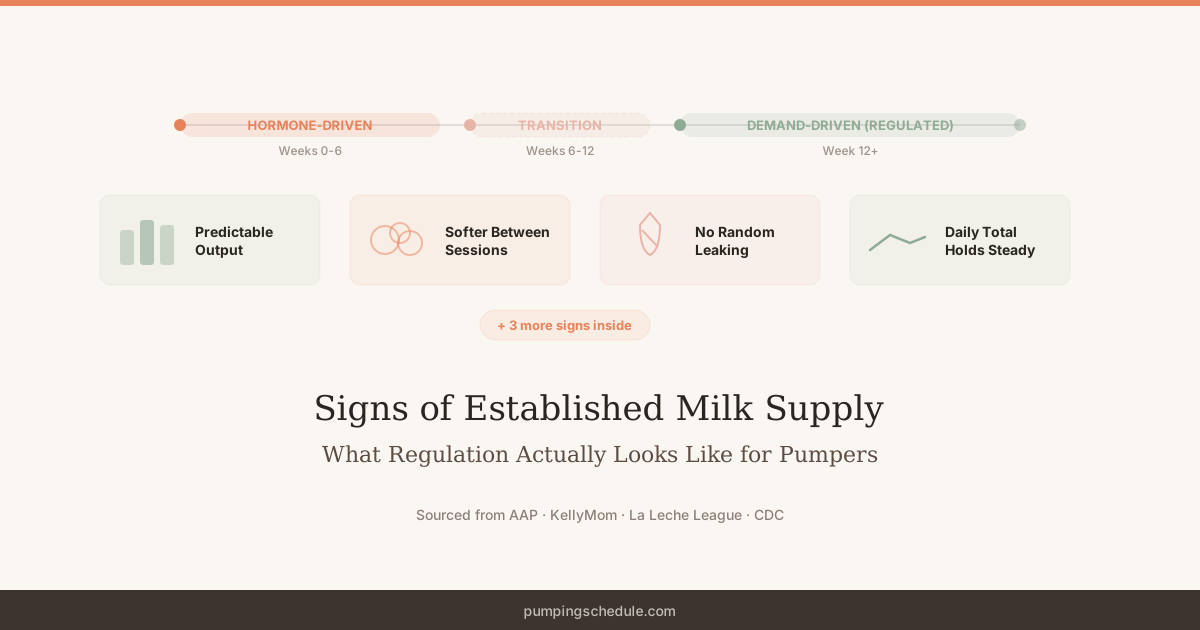
In the first weeks postpartum, your milk supply runs on hormones. Prolactin surges after delivery and tells your body: produce milk, questions later. Lactation researchers call this endocrine control — hormones driving production regardless of how much milk actually gets removed.
Between 6 and 12 weeks, the system switches. KellyMom's overview of milk production describes this as the shift to autocrine control — supply governed locally, at the breast level. Remove milk frequently and your body makes more. Remove less and production slows. The hormonal safety net is gone. What you pump is what you get.
This is why the signs of established milk supply while pumping feel so alarming. Your body was overproducing on autopilot. Now it is matching your pump's demand signal — and if you pump 6 times a day at 12 weeks, it calibrates to that, not to the 8 sessions you were doing at week 3.
One mom on r/ExclusivelyPumping put it this way: “Nobody explained that regulation would feel like losing supply. I panicked for two weeks before someone told me my body was just getting efficient.” That panic is nearly universal among EP moms — and nearly always unnecessary.
When Does Milk Supply Regulate? (Timeline by Feeding Method)
Supply regulation is not one-size-fits-all. Your feeding method, pump frequency, and hormonal profile all shift the window:
| Feeding Method | Typical Regulation Window | Key Factor |
|---|---|---|
| Exclusively nursing | 6-9 weeks | Baby's efficient suckling drives faster calibration |
| Exclusively pumping | 9-14 weeks | Pump is less efficient than baby; calibration takes longer |
| Combo (nursing + pumping) | 8-12 weeks | Mixed signals — body calibrates to combined removal |
| Supplementing / triple feeding | 8-14 weeks | Fewer total removals may delay regulation or set lower baseline |
Exclusive pumpers regulate later than nursing moms. Even a hospital-grade Spectra S1 with ideal flange fit does not empty the breast as thoroughly as a baby. The La Leche League notes that pumps remove milk differently than nursing, so the feedback loop needs more cycles to settle. Nothing is wrong — your timeline is just a bit longer.
If you are at 3 months and noticing shifts in your output patterns, you are right on schedule for signs of established milk supply to appear.
7 Signs Your Milk Supply Is Established (for Pumping Moms)
These are the milk supply regulated signs that matter when you pump — not the generic breastfeeding list that assumes a baby is at the breast. Three or more? Your supply has likely regulated.
- Predictable session output. You used to get anywhere from 2 to 6 oz depending on the session and the moon phase. Now your 6 AM pump gives 4-5 oz every morning, and your afternoon pump gives 2.5-3 oz every afternoon. The swings narrowed. This consistency is the single most reliable sign of established milk supply while pumping.
- Breasts feel softer between sessions. Early on, skipping a pump by 30 minutes turned you into a concrete statue. After regulation, you can go an extra hour without that rock-hard, about-to-burst feeling. Your breasts still fill — they just stop broadcasting about it.
- No more random leaking.Those surprise letdowns in the grocery store? Gone or significantly reduced. (Your nursing pads may finally get a day off.) Your body has stopped the “make milk first, ask questions later” approach.
- Letdown timing becomes predictable. Whether 30 seconds or 2 minutes, you can set your mental clock by it. In the early weeks, letdown could arrive instantly or take five minutes of staring at the wall willing it to happen.
- Per-session volume drops, but daily total holds. This one sends moms into a spiral. Your morning pump went from 5 oz to 3.5. But your 10 AM session went from 2 oz to 3 oz. Daily total? Same 28 oz. Your body redistributed — it did not quit. If you are tracking in the Medela app or a spreadsheet, look at the 24-hour number, not individual sessions.
- You can miss a session without disaster. Not that you should make a habit of it. But if you sleep through an alarm or get stuck in traffic, your next session compensates and your daily total barely moves. Before regulation, a missed pump could trigger a multi-day dip.
- Pump time to empty shortens. Sessions that used to take 25-30 minutes now wrap up in 15-20. Your body is producing what it plans to produce — no overflow to clear.
A poster on r/ExclusivelyPumping described it perfectly: “Regulation felt like going from a fire hose to a faucet. Same water, just controlled.”
You are not producing less. You are producing smarter. If you are checking off these milk supply regulated signs one by one, your body has done exactly what it was supposed to do.
Regulated Supply vs Low Supply — How to Tell the Difference
This is the question that keeps EP moms up at night — and not just because of the MOTN pump. Here is the difference:
- Signs of established milk supply (regulated): Daily total stable at 24-32 oz (or whatever meets your baby's intake). Per-session amounts predictable. Baby gaining weight normally, producing 6+ wet diapers daily, and showing satisfied feeding cues after bottles.
- Actually low:Daily total consistently below your baby's needs and still dropping. Output declining week over week with no stabilization. Baby not gaining well.
The CDC's guidelines on breast milk note that babies typically consume 24-32 oz per day between 1 and 6 months of age. If your daily total lands in that range and your baby is thriving, you are regulated — not low.
If output genuinely is not meeting your baby's needs, that is a different situation. Our guide on how to increase milk supply while pumping covers evidence-based strategies. But verify the problem is real first — track daily totals for a full week before changing anything.
What Changes After Regulation (What to Expect)
Once you see these signs of established milk supply, your pumping life shifts in ways nobody warns you about.
Your freezer stash growth slows or stops. Those extra 8-10 oz per day that were piling up? Gone. After regulation, maintaining a stash requires either an extra session or strategic power pumping. The freezer will not fill itself anymore. (Rude, honestly.)
You can start dropping sessions. This is the payoff. Your body can handle longer gaps between pumps without penalizing you. Most EP moms move from 7-8 sessions down to 5-6 after confirmed regulation. Our guide on when to drop a pumping session covers the method step by step.
Supply responds to demand more slowly. Adding a session at 4 weeks would boost output within a day or two. After regulation, the same change takes 3-5 days to register. Patience becomes a pumping skill.
Hormonal symptoms ease. The relentless thirst, night sweats, and intense letdown tingling? They often mellow. Your body is cruising, not sprinting.
Breast asymmetry becomes more obvious. You have a dominant side — everyone does. Before regulation, both breasts were overproducing, so the gap was harder to notice. Now one side might consistently produce 60% of your total. Annoying, completely normal, and not something you need to fix.
How to Protect Your Established Milk Supply After Regulation
Your established milk supply pumping routine has set a baseline. It is resilient, but not bulletproof. These habits keep it steady:
- Keep your daily pump count consistent. The number matters more than exact timing. Five sessions spaced unevenly still works — five one day and three the next does not. For guidance on frequency, see how often to pump.
- Pump to empty, not to a timer. Cutting sessions short is the fastest way to slowly lose supply. Milk left behind signals your body to produce less. If sessions are running long, check your pump parts — worn Pumpables or Spectra valves and membranes are the most common culprit, and they are cheap to replace.
- Drop sessions one at a time. Wait 5-7 days between drops. Your body needs time to redistribute production across remaining sessions. Two drops in one week is how regulated supply becomes undersupply.
- Watch the MOTN pump closely. Dropping the overnight session works for most regulated moms, but it is the one most likely to dip your daily total. Monitor output for a full week after dropping it.
- Stay ahead of illness and stress. Both suppress supply temporarily. If you feel a cold coming or hit a high-stress week, add 5 extra minutes to one or two sessions as a buffer. The ACOG recommends continuing to pump through illness — most infections do not pass through breast milk, and your antibodies do.
If supply takes a hit, a few days of power pumping can usually nudge it back. The autocrine system still responds to increased demand — it just needs more convincing than it did at week 4.
Last reviewed: July 2026 by the Pumping Schedule Editorial Team. Read our editorial standards.
Related Reading
- Exclusive Pumping Schedule — daily session counts, timing, and stash strategies by age
- Pumping Schedule at 3 Months — when regulation typically happens and what to adjust
- When to Drop a Pumping Session — the gradual method for reducing sessions after regulation
- How to Increase Milk Supply While Pumping — recovery strategies if output is genuinely low
- Best Hospital Grade Breast Pump — if your IBCLC recommends stronger suction after regulation
- When to Start Pumping — how early pumping timing affects your supply trajectory